

Does it Snow in Japan? The Short Answer
After my long winter trip to Japan, several people expressed surprise at the temperatures I mentioned and asked me, “Does it snow in Japan?” The answer is “Yes, it does.” But it’s not as simple as that.
Japan is famous for its cherry blossoms, autumn colours and warm, humid summers, but winter brings a very different side of the country. Snow transforms mountain villages, creates spectacular winter festivals and attracts skiers from around the world.
So yes, it does snow in Japan. But there are huge regional and seasonal variations. Japan is a very long country, stretching about 1800 miles from north to south. Hokkaido in the north is considered Japan’s Siberia, whereas Okinawa in the south is subtropical. Even at similar latitudes, Japan’s mountains, coastlines and weather systems create substantial differences in snowfall. Some areas receive metres of snow each winter, while cities such as Tokyo and Osaka may see little or none.
If you are planning a winter trip, it is worth choosing your destinations carefully. Whether you want to ski, see snow-covered temples, see Japan’s unique wildlife, visit a winter festival or simply experience Japan in a different season, there are plenty of options.
The Do Not Go Gently Travel Blog uses affiliate links. If you make a purchase after clicking on one of these links, I may receive a small commission payment at no extra cost to you.
Why does it snow so much in some parts of Japan?
Many variables affect the distribution of snow in Japan. I’ve already mentioned the country’s length and topography as significant drivers of climate, but there are others.
A major factor is cold air arriving from Siberia in winter. As it crosses the Sea of Japan, it collects moisture before reaching the Japanese coast and mountains. This can translate into heavy snowfall, particularly in areas along the Sea of Japan and in the north.
By contrast, the Pacific side of the country is often drier in winter. Tokyo, for example, can have clear, sunny days while parts of the Japan Sea coast are experiencing heavy snowfall. When I was last in Japan, it did snow, and I was told how unusual it was.
The result is a country where snow conditions can vary dramatically over relatively short distances. A forecast for Japan as a whole is not very useful. Check the weather for the specific region and town you plan to visit.
Where does it snow in Japan?
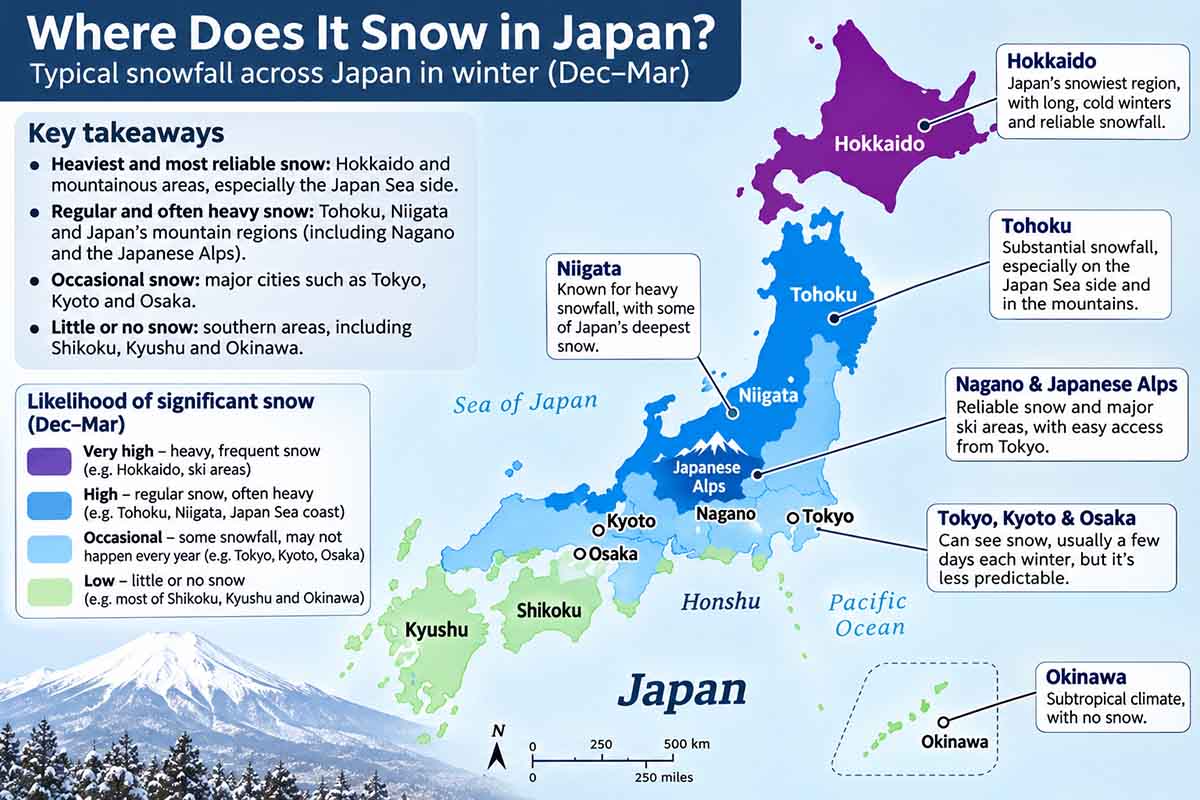
Hokkaido: Reliable Winter Snow
Hokkaido, Japan’s northernmost main island, is one of the best places to visit if you want to see snow. Winters are cold, and snow is a regular feature of the season.
The island is famous for its ski resorts, including Niseko and Rusutsu, but you do not need to ski to enjoy a winter visit. Sapporo is a major city with snowy parks, winter food and easy access to nearby landscapes. Further afield, you can find frozen lakes, snowy forests and hot-spring towns.
Spectacular wildlife excursions are also available. Tourists can take boat trips to see massive Steller’s eagles feeding on the ice pack or visit a winter feeding station to see the majestic red-crowned cranes.
Hokkaido is a good choice if snow is central to your trip, although conditions still vary from place to place and from year to year.
Tohoku: Snowy Towns and Mountain Scenery

The Tohoku region in northern Honshu also experiences substantial snowfall, particularly on the Sea of Japan side and in mountainous areas.
A winter visit can bring snow-covered traditional buildings, rural scenery and hot-spring resorts. The region is also home to the town of Zao, known for its striking “snow monsters”. Evergreen Aomori todomatsu trees become coated in snow and ice, taking on unusual shapes during winter.
Japan is very efficient (as you might expect) in keeping roads open during snowstorms. A combination of traditional methods like snowploughs and salt is used, but they also have another trick up their sleeve. Japan utilises snow-melting sprinklers (shosetsu). When temperatures drop, groundwater, often heated naturally by geothermal activity, is sprayed onto roads to melt snow before snowploughs become necessary.
Despite this, snowfall can make travel slower, so allow extra time if you are combining several towns or travelling through mountainous areas.
Nagano and the Japanese Alps
The mountains of central Japan are another excellent place to find snow. Nagano hosted the 1998 Winter Olympics and remains an important winter-sports destination. The wider region has ski resorts, mountain scenery and traditional towns.
Conditions differ with altitude and location, so check local forecasts before setting out for mountain walks or scenic routes.
Nagano also benefits from being close to Tokyo, with bullet train links. This makes short ski breaks possible from the capital with the Shinkansen taking less than two hours to cover the distance (weather permitting).
Niigata and the Sea of Japan coast
Niigata and neighbouring areas are known for heavy winter snowfall. The combination of cold air, moisture from the Sea of Japan and nearby mountains can create deep snow.
This region has ski areas as well as towns and rural landscapes that offer a different experience from Japan’s biggest cities. Once more, even Japan’s hyper-efficient train services can be affected by heavy snow. Plan your travel accordingly.
Tokyo, Kyoto and Osaka: snow is possible, not guaranteed
Japan’s best-known cities do not offer the same reliability of snowfall as Hokkaido or the mountains.
Tokyo can receive snow, but it is not regular. When it does snow, even a modest fall can disrupt roads and public transport. Kyoto and Osaka can also experience occasional snow, but don’t plan a trip around the expectation of a snow-covered city.
If seeing snow is important to you, consider adding a northern or mountainous destination to your itinerary rather than relying on a major city.
When does it snow in Japan?
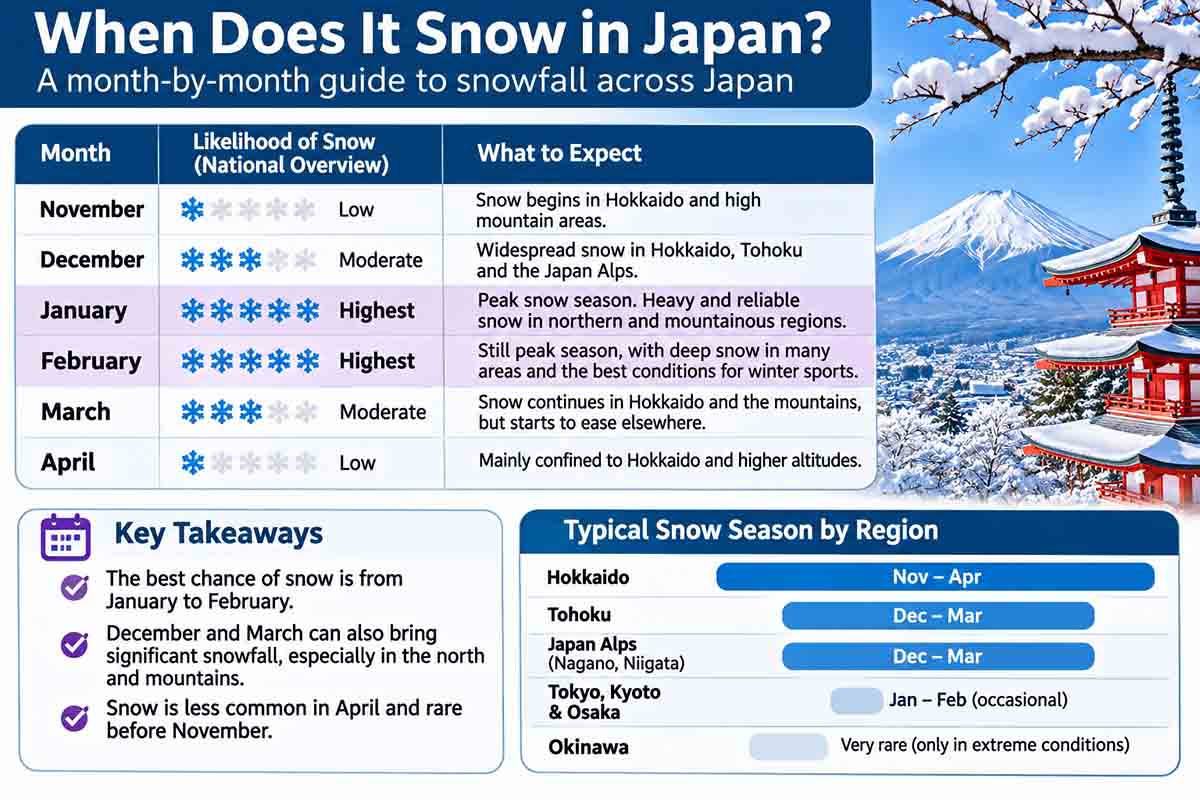
In much of the country, the main snow season runs from December to March, although the timing and amount vary by region and altitude.
- December: Northern and mountain areas start to see substantial snowfalls. Some ski resorts reopen.
- January and February: generally the coldest months (I encountered -15 degrees C in January) and often the most dependable months for snow in Hokkaido and many mountain destinations.
- March: Snow can remain plentiful in northern areas and at higher elevations. Milder weather creeps into lower and more southerly places.
If your priority is seeing snow rather than skiing, January and February are the best months to consider. However, there is no guarantee of snowfall on particular dates, especially in cities where snow is less frequent.
Things to Do When It Snows in Japan
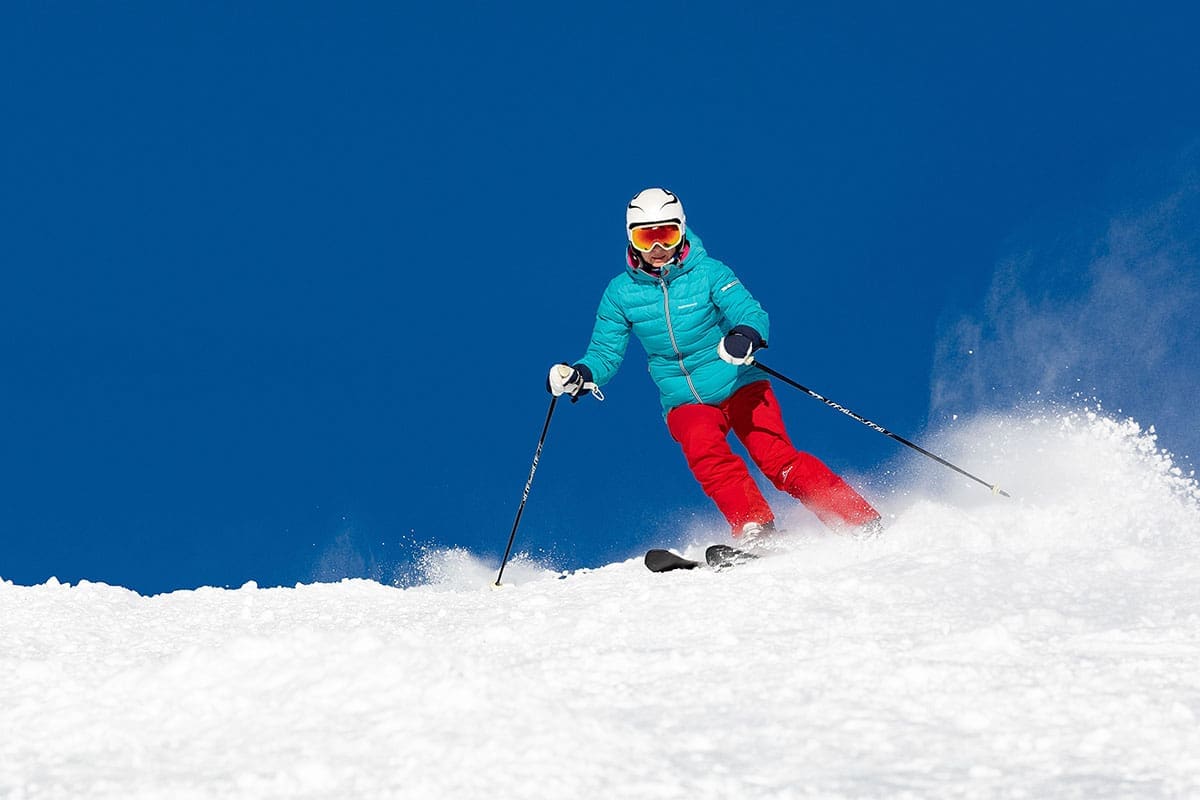
Partake in Alpine Sports – Japan is a Top Ski Destination
Japan is an established international ski destination, with hundreds of ski resorts spread across the country. Its reputation is built on consistent snowfall in many regions, varied terrain and the quality of its powder snow.
Hokkaido is especially popular with overseas visitors, with resorts such as Niseko and Rusutsu. In central Japan, Nagano and the surrounding mountains offer a wide choice of ski areas. The usual ski season is broadly December to April, although opening dates and snow conditions vary.
Japan’s Winter Olympics history reflects its place in winter sports. Sapporo hosted the 1972 Winter Olympics, the first Winter Games held in Asia, and Nagano hosted the 1998 Winter Olympics. The events helped put Japan’s winter destinations on the international map.
If you are planning to ski, check what is included in lift passes and equipment hire, and whether lessons are available in a language you speak.
Onsen: the perfect way to enjoy Japan’s snow
One of the most memorable experiences of a Japanese winter is soaking in an outdoor hot spring, or rotenburo while snow falls around you. Japan’s onsen culture is deeply rooted in the country’s volcanic landscape, with natural hot springs providing warmth and relaxation during the coldest months.
The snowy mountains of Hokkaido, Tohoku and the Japanese Alps are particularly rewarding destinations for this experience. Places such as Ginzan Onsen in Yamagata and Nyuto Onsen in Akita are renowned for their atmospheric winter scenery. Here, visitors find traditional wooden buildings and steaming baths surrounded by snow-covered landscapes.
Many onsen resorts also offer traditional Japanese accommodation, known as ryokan, where you can enjoy seasonal cuisine, sleep on futons and experience the country’s famous hospitality.
For travellers wondering whether it snows in Japan, an onsen holiday offers a wonderful reason to embrace the winter weather. Just remember that outdoor baths can be slippery, and some traditional establishments have strict rules and etiquette. These include restrictions on tattoos (which have organised crime connotations).
The Sapporo Snow Festival
One of Japan’s best-known winter events is the Sapporo Snow Festival, held in Hokkaido’s capital in early February. It began in 1950 when local students created snow sculptures in Odori Park, and has since grown into a major event attracting visitors from Japan and overseas.
The festival features enormous snow sculptures as well as detailed ice carvings. The main displays are in Odori Park, while other sites have additional ice sculptures and snow activities. After dark, many of the displays are lit up, enhancing the atmosphere for an evening visit.
The festival is a strong reason to consider Sapporo for a winter trip, even if you are not interested in skiing. However, it attracts sizeable crowds, book accommodation well in advance and check the dates for the year you plan to visit. The event is usually held for about a week in early February.
Winter Wildlife Watching in Japan
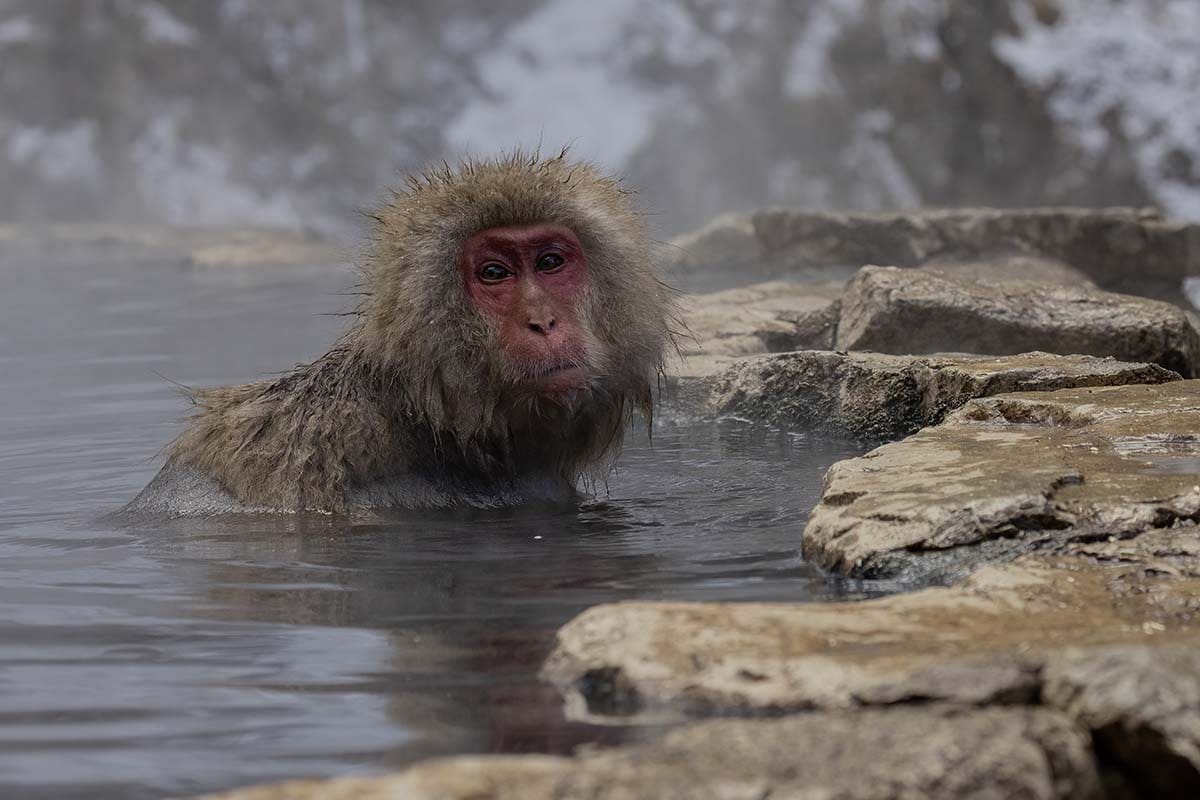
Japan is an excellent country for wildlife watching all year round, but it comes into its own during the winter.
Steller’s Sea Eagles: When the pack ice arrives from Siberia, boat trips are run to see the majestic Steller’s Sea eagles, which sit patiently waiting for frozen fish to be flung for them. Seeing these massive birds compete for the food is one of the world’s great wildlife spectacles.
Snow Monkeys: One of Japan’s most famous wildlife-watching opportunities. The snow monkeys (Japanese macaques) sit in the hot pools at Jigokudani near Nagano. The world’s northernmost monkey, they have developed this technique to combat the subzero temperatures.
Be aware, the walk to the snow monkey viewing point was particularly treacherous. I wore crampons and used a ski pole, but saw several falls and three blue light ambulances taking injured walkers to hospital.
Red-Crowned Cranes: revered in Japan as a symbol of longevity, red-crowned cranes gather in their thousands at feeding stations on Hokkaido. The Akan International Crane Centre is one of the best locations to see these elegant birds.
See Mount Fuji Covered with Snow

A snow-capped Mount Fuji is one of Japan’s most iconic images, but during the winter period, it is best viewed from a distance. During the summer, hiking trails and huts are open, but when winter bites, only experienced mountaineers with professional equipment are allowed on the mountain.
The winter months are actually the best time to get a clear view of Fujisan. Crisp, clear air making the summit more likely to be visible than in the summer. The best views can be had in the Five Lakes region or the Kawaguchiko area.
Although winter offers the best chance to see the summit, clouds can still form. Go early in the morning, or stay overnight to increase your chances.
Practical tips for visiting Japan in winter
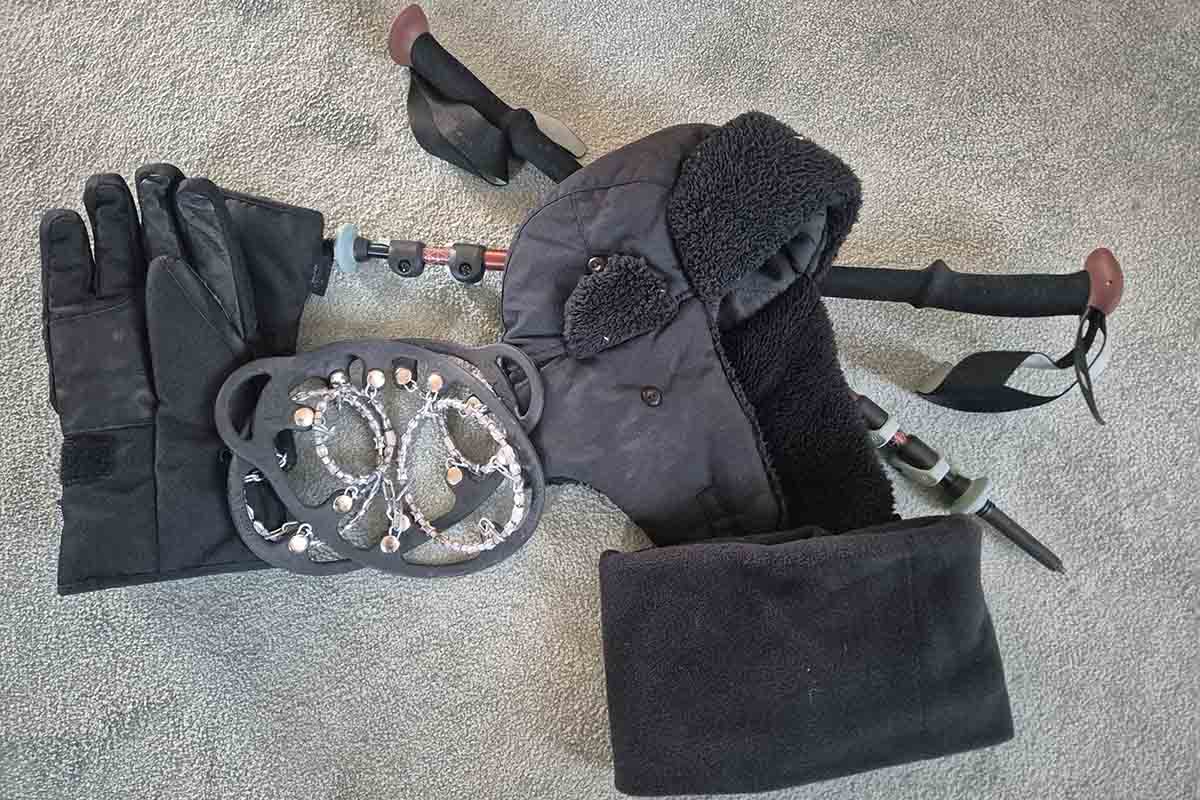
Pack for the region, not just the season. Tokyo’s winter weather can feel very different from Hokkaido’s. For snowy destinations, bring warm layers, gloves, a hat and footwear with good grip. Waterproof shoes are useful, and removable traction aids (slip-on crampons) can help on icy pavements.
Allow extra time for travel. Snow can affect trains, buses and roads, particularly in mountain areas. Avoid planning tight connections when travelling through regions that regularly receive heavy snow and check service updates on the day.
Book early for major winter events. Sapporo becomes particularly busy during the Snow Festival. Reserve accommodation well ahead if your dates are fixed, and check the festival’s official information before travelling.
Check local conditions. Snowfall is highly regional. One destination may have deep snow, while another, only a short journey away, has none. Look at local forecasts and seasonal information for each stop rather than assuming the whole country will be snowy.
Be realistic about accessibility. Snow and ice can make walking more difficult, especially on slopes, steps and uneven surfaces.
If you prefer to avoid challenging winter conditions, choose accommodation close to stations and attractions, use taxis where practical, and build in time to walk carefully.
Does it Snow in Japan, and is Japan Worth Visiting in Winter – Conclusion
Yes, it does snow in Japan and yes it absolutely is worth visiting in winter!
Winter offers a different perspective on Japan, from the reliable snow of Hokkaido and the mountain regions to the occasional snowfall of its major cities. It is also the season for skiing, hot springs, winter food and events such as the Sapporo Snow Festival.
The key is to remember that Japan is a long, geographically varied country. If snow is the main reason for your visit, head north or into the mountains and plan around local conditions. If you are visiting Tokyo, Kyoto or Osaka, treat snow as a possibility rather than a certainty.
With the right destination and a flexible itinerary, winter can be a rewarding time to explore Japan.
Latest Posts from Japan


Latest Travel Tips Posts