
Welcome to this Chile travel guide. This is your jumping-off point to my blog posts on one of the longest countries in the world (Brazil just pips it to that spot in the Guinness Book of Records).
From the deserts of Atacama to the glaciers of Patagonia. From its capital Santiago de Chile nestling in the shadows of the might Andes to the faces of the Moai on Rapa Nui, Chile has something for everyone.
The Do Not Go Gently Travel Blog uses affiliate links. If you make a purchase after clicking on one of these links, I may receive a small commission payment at no extra cost to you.
Hotels – Booking.com
Tours and Activities – Get Your Guide and Viator
Flights – Trip.com
Travel Guide – Lonely Planet Chile & Rapa Nui (Easter Island)
Latest Posts from Chile



Chile Travel Guide – All you need to know about Chile
Chile is one of the most geographically extraordinary countries on Earth. Stretching like a narrow ribbon along the western edge of South America, it extends for over 4,000 kilometres. Chile’s landscapes range from the world’s driest desert in the north to the glaciers and wild landscapes of Patagonia in the south. Between these extremes lie vibrant cities, colourful coastal towns, snow-capped volcanoes, ancient forests, fertile wine valleys and one of the most remote inhabited islands on the planet.

For travellers, Chile offers an astonishing variety of experiences. You can explore otherworldly desert landscapes one week, wander through colourful streets filled with art and history the next, and then find yourself surrounded by mountains, lakes or glaciers. Its remarkable length and geography mean that Chile feels less like a single destination and more like several completely different countries joined together.
Yet despite its diversity, Chile has a strong and distinctive identity. The country’s people are proud of their land, traditions, and heritage. The blend of indigenous roots, colonial past, and modern culture makes for a unique travel experience. Whether you’re interested in nature, history, food, wine, culture or adventure, Chile is a destination that rewards curiosity.
A Country Shaped by Geography
Chile’s geography is unlike almost anywhere else in the world. The country is very long and thin, sandwiched between the Pacific Ocean and the Andes Mountains. At some points, the distance from the mountains to the coast is tiny. Yet the country stretches across an enormous range of latitudes and climates.
This unusual shape creates one of Chile’s greatest attractions: its extraordinary variety of landscapes.
In the far north lies the Atacama Desert. A dramatic and seemingly endless landscape of salt flats, volcanoes, lagoons, and valleys. Around San Pedro de Atacama, visitors can explore otherworldly landscapes. NASA even tested the Mars Rover there. Geysers steam in the early morning cold. Flamingos gather on high-altitude lagoons and vast salt flats stretch towards volcanoes on the horizon.
Further south, the landscape changes completely. Central Chile is home to fertile valleys, vineyards, and some of the country’s most important cities. Santiago de Chile, the capital, sits in a spectacular setting surrounded by the Andes. Meanwhile, a short bus ride will take you to Valparaíso. Full of street art, it tumbles down steep hillsides towards the Pacific Ocean.
Continue south, and Chile becomes greener. Lakes, forests and volcanoes dominate the landscape, while the far south is home to the dramatic wilderness of Patagonia. Here, glaciers, fjords, mountains, and windswept plains create some of the world’s most spectacular scenery.
Few countries offer such dramatic contrasts within their borders.
Cities, Culture and Colour
Although Chile is famous for its natural landscapes. But, its cities and towns offer an equally important part of the travel experience.
Santiago de Chile is usually the starting point for international visitors. It is a modern and energetic capital where contemporary neighbourhoods sit alongside historic districts, museums and traditional markets. The city also provides an excellent introduction to Chilean food and wine.
Santiago’s location makes it particularly fascinating. On a clear day, the Andes provide a spectacular backdrop, reminding visitors that some of South America’s greatest mountain landscapes are never far away. The city is also conveniently positioned for exploring central Chile, including wine regions, coastal towns and the colourful streets of Valparaíso.
Valparaíso has an entirely different character. Built across a series of steep hills overlooking the Pacific, it is famous for its colourful houses, street art, historic funicular railways and bohemian atmosphere. Its maze of staircases and narrow streets makes exploring the city an adventure in itself.
Chile’s culture has been shaped by indigenous peoples, Spanish colonisation, immigration and the country’s geographical isolation. This mixture influences its architecture, traditions, music, and cuisine. The indigenous Mapuche culture remains important in southern and central Chile. Elsewhere, deep in the Pacific, Rapa Nui, Easter Island’s Polynesian heritage provides a completely different cultural experience.
The result is a country with far more cultural variety than many first-time visitors expect.
Easter Island and the Mystery of Rapa Nui
No Chile travel guide would be complete without featuring one of Chile’s most extraordinary destinations lies thousands of kilometres out in the Pacific Ocean.
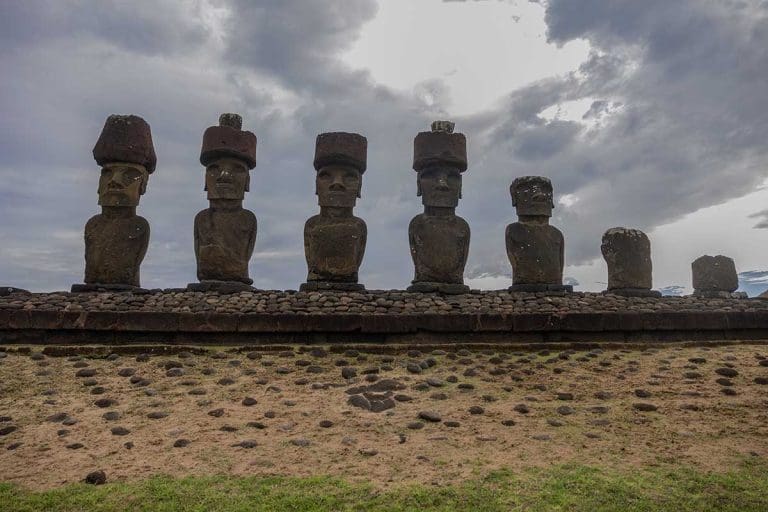
Rapa Nui, more widely known as Easter Island, is one of the world’s most remote inhabited islands and one of its most fascinating archaeological destinations. Famous for the enormous stone moai statues that stand across the island, Rapa Nui has a totally different history and culture to mainland Chile.
Visiting Easter Island is about far more than seeing the moai. The island’s volcanic landscapes, dramatic coastline and archaeological sites help tell the story of a remarkable Polynesian civilisation that developed in isolation.
Walking among the statues at sites such as Tongariki or exploring the volcanic quarry where many of the moai were created is an unforgettable experience. Rapa Nui is also a place where nature and history are inseparable, with volcanic craters, caves and rugged coastal scenery forming part of the island’s appeal.
For many travellers, Easter Island is a once-in-a-lifetime destination and one of the highlights of any journey through Chile.
A Paradise for Nature and Adventure Lovers
Chile is one of South America’s finest destinations for travellers who love the outdoors.
The Atacama Desert is particularly popular for exploring dramatic natural landscapes. Visitors can watch sunrise over geyser fields, walk through valleys shaped by wind and water, visit salt lagoons filled with flamingos and stargaze beneath some of the clearest skies in the world.
In the south, Chilean Patagonia offers an entirely different kind of wilderness. Towering mountains, ancient forests and vast glaciers make this one of the world’s great destinations for trekking and nature photography.
Even travellers who are not looking for extreme adventure will find plenty to enjoy. Simply travelling through Chile can be an experience in itself, with spectacular scenery appearing outside the window on flights, road journeys and bus routes.
Chilean Food and Wine
Food is another important part of discovering Chile.
The country’s extraordinary geography influences its cuisine, with the Pacific Ocean providing an abundance of seafood and the fertile central valleys producing fruit, vegetables and wine. Chilean cuisine combines indigenous traditions with Spanish influences and ingredients shaped by the country’s diverse climate.
Along the coast, seafood plays a major role, while dishes such as empanadas are popular throughout the country. Fresh fish, shellfish, and local specialities can be found in markets and restaurants, particularly in coastal cities and towns.
Chile is also one of South America’s most important wine-producing countries. The wine valleys surrounding Santiago and further south are famous for producing excellent Cabernet Sauvignon, Carmenère, and other varieties. Visiting a vineyard can easily be combined with a stay in Santiago or a journey through central Chile.
Food and wine are therefore not simply additions to a trip through Chile; they are an important way of understanding the country’s landscapes and regional differences.
Why Visit Chile?
As this Chile travel guide demonstates, Chile is a destination for travellers who enjoy variety and discovery.
It offers world-famous attractions, such as Easter Island and the Atacama Desert, alongside places that remain relatively undiscovered by international visitors. It is possible to experience ancient cultures, modern cities, colourful street art, outstanding food and some of the world’s most dramatic natural landscapes within a single journey.
The scale of the country means that it is impossible to see everything in one visit. Most travellers will need to choose between regions or focus on a carefully planned itinerary. Fortunately, Chile’s excellent domestic flight network makes it possible to combine destinations that would otherwise be separated by enormous distances.
Whether you are planning your first trip to South America or returning to explore more of the continent, Chile deserves to be high on your list. From the surreal landscapes of the Atacama to the colourful hills of Valparaíso, from the vibrant streets of Santiago to the mysterious moai of Rapa Nui, this is a country that constantly surprises.
Chile is a destination of contrasts: desert and glacier, mountain and ocean, ancient civilisation and modern city, wilderness and culture. It is a country that invites you to travel slowly, look beyond the obvious and appreciate the extraordinary diversity packed into one long and narrow strip of South America.
This guide to Chile will help you discover the country’s most fascinating destinations, plan your journey and explore the experiences that make travelling here so unforgettable.