

Best 14 Day Travel Itinerary for Chile: Santiago, Valparaiso, Easter Island and the Atacama Desert
14 Day Chile Itinerary
Welcome to the best 14 day Chile Itinerary. This curated schedule will take you through diverse landscapes, explore unique cultures and introduce you to some of the world’s best food and drink.
Chile is one of South America’s most extraordinary countries for travellers who enjoy variety. Stretching over 2,600 miles from the Atacama Desert to Patagonia’s southern glaciers, Chile boasts an incredible mix of scenery, cultures, history, and food.
But Chile is vast, so attempting to see too much in two weeks can leave you spending more time in airports than experiencing the country.
This 14 day Chile itinerary concentrates on four destinations that together provide a fascinating introduction to the country: Santiago de Chile, Valparaiso, Easter Island (Rapa Nui) and San Pedro de Atacama.
The route combines Chilean history and culture with extraordinary natural landscapes, archaeological sites, indigenous traditions and some excellent food and wine. It also deliberately allows enough time in each destination to experience it rather than simply ticking attractions off a list.
Chile in 14 days at a glance
| Days | Destination |
|---|---|
| Days 1–3 | Santiago de Chile |
| Day 4 | Valparaiso |
| Days 5–8 | Easter Island (Rapa Nui) |
| Days 9–13 | San Pedro de Atacama |
| Day 14 | Return to Santiago and depart |
This itinerary works particularly well for first-time visitors to Chile because each stop feels completely different.
Santiago introduces you to modern Chile and its colonial and turbulent political history. Valparaiso provides colourful streets, historic architecture and one of Chile’s most distinctive urban landscapes. Rapa Nui adds Polynesian culture and some of the world’s most remarkable archaeological sites, while San Pedro de Atacama provides an extraordinary finale among volcanoes, salt flats, lagoons and desert landscapes.
The Do Not Go Gently Travel Blog uses affiliate links. If you make a purchase after clicking on one of these links, I may receive a small commission payment at no extra cost to you.
I recently spent two months travelling through Chile and Argentina. When researching and planning the trip, these are the main resources I used.
Hotels – Booking.com
Tours and Activities – GetYourGuide
Travel Guide – Lonely Planet Chile & Rapa Nui (Easter Island) – (Amazon)
Days 1–3: Santiago de Chile

Most international flights route through the capital city Santiago de Chile, so it is the natural starting point for the best 14 day Chile itinerary.
Set in a broad valley beneath the Andes, the capital is a city of contrasts. Modern skyscrapers stand alongside nineteenth-century buildings, grand plazas and historic churches, while the surrounding mountains provide an impressive backdrop.
Three days gives you enough time to explore the main sights without making the beginning of your trip feel rushed.
Day 1 – Historic Santiago

Begin in the historic centre around Plaza de Armas, the traditional heart of Santiago.
The square is surrounded by some of the city’s most important buildings, including the Metropolitan Cathedral and the former Royal Court. Nearby streets provide an introduction to the city’s colonial history and changing architectural styles.
Continue towards La Moneda Palace, Chile’s presidential palace. The building is closely associated with one of the most important and tragic episodes in modern Chilean history, the military coup of 1973 and the last days of President Salvador Allende.
History buffs can explore Chile’s colonial and recent political history through Santiago’s museums. Most of Santiago’s major museums and art galleries are free, (the Chilean Museum of Pre-Columbian Art being an exception). Note that they are almost all closed on Mondays.
To truly understand Santiago’s complex and often violent history, I recommend taking a Santiago walking tour guided by a local. I took this one, and it was exceptionally good.
Lunch: explore Chilean food
Santiago is an excellent place to start discovering Chilean cuisine.
Look for traditional dishes such as:
- Empanadas de pino – pastry filled with beef, onion, egg, and olives
- Pastel de choclo – a baked dish of meat topped with sweetcorn
- Cazuela – a hearty meat, vegetable, and potato soup
- Completo – Chile’s famously overloaded hot dog
- Lomo a lo pobre – steak served with chips, fried onions and fried eggs
For seafood, Chile’s long Pacific coastline provides an extraordinary range of fresh fish and shellfish, and no matter where you are in Chile, you’re never very far from the sea.
Check out the neighbourhoods of Lastarria and Bellavista in the afternoon for cafes, galleries, restaurants, and street art.
Day 2 – Santiago from above
Spend your second day exploring Santiago’s parks and viewpoints.
Cerro San Cristóbal provides one of the best panoramas over the capital, with the Andes forming an impressive backdrop on a clear day.
The hill is part of the large Metropolitan Park and can be reached in several ways. The funicular and cable car make it particularly easy to combine the viewpoint with a leisurely exploration of the park. Be aware that Santiago’s parks are often closed if the weather turns bad.

Afterwards, explore Bellavista and nearby Providencia.
Santiago is also an excellent city for coffee and cake, and Chilean once (pronounced as in Beyonce). Traditionally an afternoon meal involving tea, bread, and various savoury and sweet accompaniments, it’s definitely worth experiencing.
Try a Chilean Steak
(Vegetarians look away now) Neighbouring Argentina is world famous for its steaks, but Chile can hold its own. If anything, Chilean cattle are leaner and hormone-free, producing mouth-watering meat.
Chile is also one of the world’s great wine-producing countries, and Santiago is an ideal place to begin exploring its wines.
Look for bottles from the Maipo Valley, particularly Carménère, difficult to find outside Chile, or try wines from the Colchagua, Casablanca or Aconcagua valleys.
Day 3 – Vineyards and Wine Tastings

After getting a taste for Chilean wines, it’s time to go to the source. A winetasting tour. I took part in several during my extended trip to Chile, purely for the reasons of research, of course, and I thoroughly recommend the one below. It does, however, come with a health warning! The pickup is at 7:30, the first wine tasting is about 10am, and then they brought out the pisco… This was followed by visits to three other vineyards, (one of them for lunch). Make sure you have breakfast before going. Our group got on so well that souvenir bottles were drunk on the bus on the way back to town. We then ended up in a hotel bar!
Where to stay in Santiago
For a first visit, consider staying in Lastarria, Bellas Artes, Providencia, or nearby central neighbourhoods like Barrio Italia. These areas make it relatively easy to combine sightseeing, restaurants, and evening activities, while being safe at night. Do not stay in the historic centre. Whereas it’s safe during the day, it has a bad reputation after dark.
Best Places to Stay in Santiago
Budget – Wanderlust Hostel B&B
Mid-range – Hotel Boutique de Leve
Luxury – The Singular, Santiago
Day 4: Santiago to Valparaiso
Valparaiso is completely different from Santiago, so it’s the perfect next stop on our best 14 day Chile Itinerary.
Founded by the Spanish in 1536, when explorer Juan de Saavedra named the bay after his birthplace in Spain, it remained a nondescript fishing village for centuries. This changed after Chile’s independence in 1818, when it became one of South America’s most important Pacific ports. Its fortunes changed just as quickly when the Panama Canal opened.
The historic port city tumbles dramatically down a series of steep hills toward the Pacific. Its brightly painted houses, historic funiculars, narrow streets, and extraordinary collection of murals give it a character unlike anywhere else in Chile.
The historic quarter is recognised by UNESCO as a World Heritage Site.
There are two ways to visit Valparaiso. I took a bus from Santiago, a journey of two hours, and stayed in a lovely boutique hotel (of which there are many). Alternatively, it’s possible to do it as a day trip from Santiago.
Exploring Valparaiso

Begin around the historic centre and gradually work your way uphill.
The city’s famous ascensores, or funicular lifts, were built to connect the lower city with its steep hills. Several have been restored and remain an important part of Valparaiso’s identity.
The hills of Cerro Alegre and Cerro Concepción are enjoyable for walking (but very steep – see below).
Expect colourful houses, independent cafes, galleries, small shops and some of the best street art in South America.
Valparaiso’s murals are not simply decoration. They are part of the city’s cultural identity and reflect its long history of political expression and artistic creativity.
If you have some extra time, take a short cab ride to Vina del Mar and explore Valparaiso’s ‘upmarket’ sister.
Valparaiso is Steep!
Be prepared to have your calves stretched on Valparaiso’s hills. Ladies, leave your heels at home. This is a town so steep that Red Bull holds one of its most spectacular and famous downhill bike races through its narrow streets. Walking the Cerros is rewarding, but challenging!
Spend the evening enjoying seafood or a traditional Chilean meal before an early start the following day.
Best Places to Stay in Valparaiso
Budget – Casa California Guest House
Mid-range – Wine Box Hotel
Luxury – Casa Galos Hotel & Lofts
Days 5–8: Easter Island – Rapa Nui

I’ve stressed the design of the best 14 day Chile itinerary focuses on each stop being different from the last, and they don’t get much different than Easter Island.
For many, Easter Island, or Rapa Nui as it’s known locally, is a bucket-list destination, and it doesn’t disappoint. Few destinations in the world feel as remote and mysterious as this small, isolated island deep in the Pacific Ocean.
Reaching the island involves a flight from mainland Chile, but the journey is well worth it. Four days gives you enough time to see the key archaeological sites while also appreciating the island’s Polynesian culture, landscape and food.
The giant heads, or Moai, may be the island’s most recognisable symbols, but Rapa Nui is far more than a collection of famous stone statues.
Day 5 – Arrival on Rapa Nui
After arriving, take the rest of the day gently.
The island has a relaxed atmosphere, and it is worth resisting the temptation to start racing around the archaeological sites the second you arrive.
First, explore Hanga Roa, the island’s main settlement, and spend some time watching the Pacific crashing against the rocky shoreline. As the afternoon gets later, take a stroll to Ahu Tahai and watch the sun sink into the ocean behind one of the great Moai ceremonial sites. Ahu Tahai is a short stroll from the centre of Hanga Roa.
After witnessing a spectacular sunset, find a restaurant for dinner. Rapa Nui cuisine reflects its Polynesian heritage as well as its relationship with the ocean. Fresh fish and seafood are especially important, and you will find dishes featuring tuna, mahi-mahi, or other locally caught fish.
Day 6 – The moai of Rapa Nui
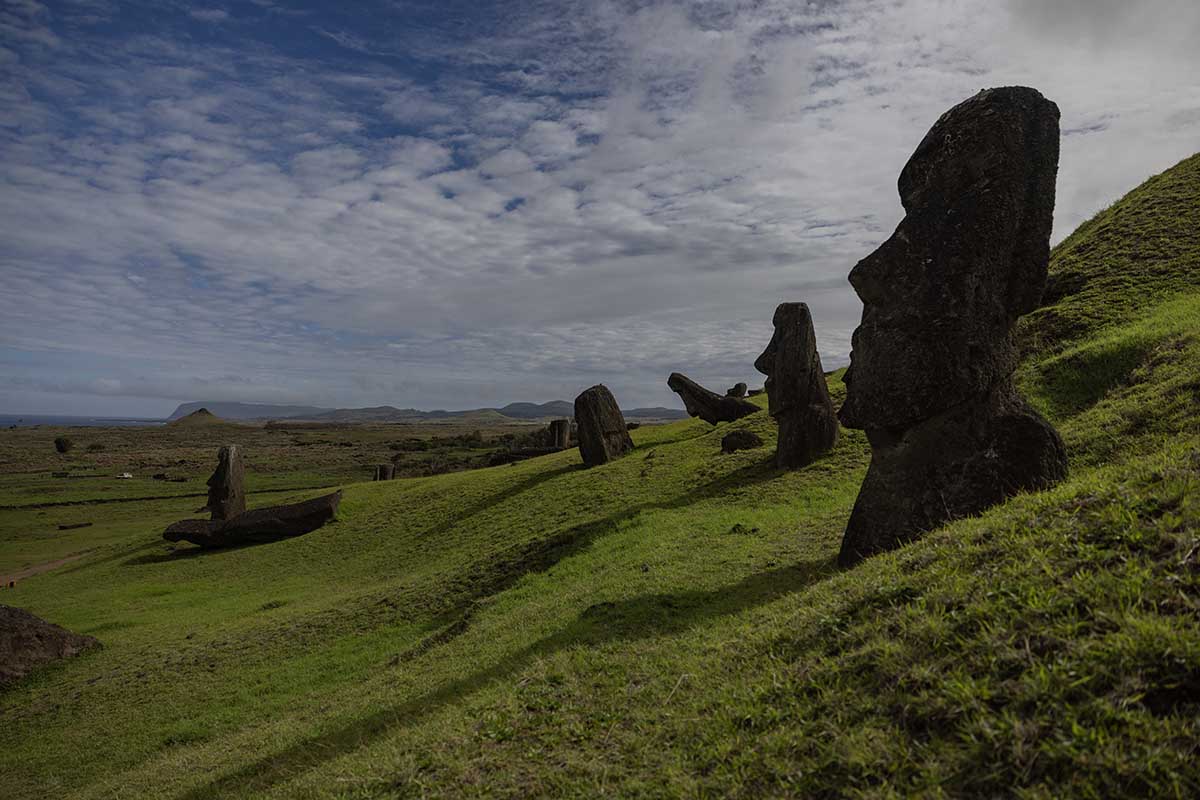
Today is devoted to some of the island’s most famous archaeological sites.
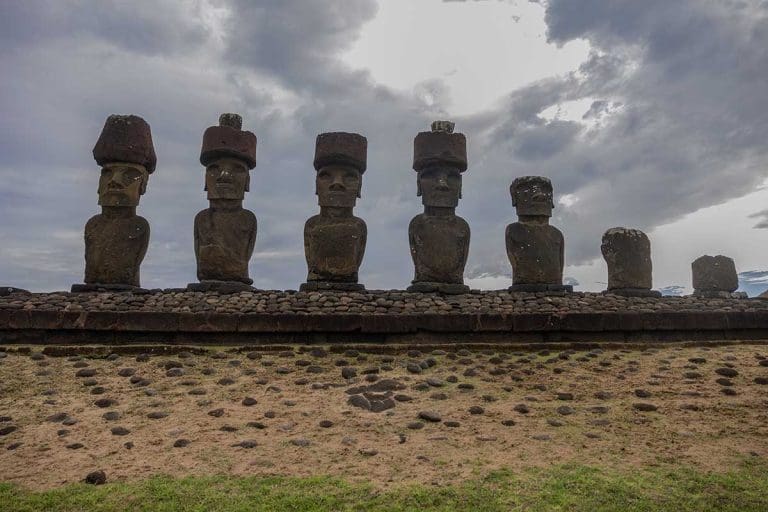
Start at Ahu Tongariki, where fifteen restored moai stand in an extraordinary line facing inland.
It is one of the most memorable sights on the island, particularly in the early morning.
Continue to Rano Raraku, the volcanic quarry where most of the island’s moai were carved.
Walking among the unfinished statues provides one of the best opportunities to understand the scale of the achievement.
Some moai remain partly embedded in the volcanic slopes, while others appear at different stages of completion.
It is one of those places where hundreds of Instagram photographs fail to convey the atmosphere of this special site.
Day 7 – Volcanoes, villages and legends
Explore more of Rapa Nui’s archaeological landscape today.
Get an early start and head to Ahu Tongariki, one of the great moai sites. Watch the sun rise behind the platform holding fifteen moai.
Orongo ceremonial village, perched on the rim of the Rano Kau volcano, provides an extraordinary combination of history and scenery.
The views across the volcanic crater and towards the Pacific are spectacular.
This site is closely associated with the island’s birdman ceremony, an important part of Rapa Nui’s later cultural history. The Birdman ceremony, where tribal champions swam across to a Motu (sea stack) offshore, climbed it and searched for the egg of the migrating Sooty Tern. The tribal chief of the champion who found the first egg became the leader for that year and spent it in spiritual retreat at Orongo.
Spend some time learning about Rapa Nui culture rather than concentrating solely on the archaeological remains. Traditional dance, music, carving, and storytelling provide an important perspective on the island’s Polynesian heritage.
Day 8 – Anakena and the Pacific

Finish your time on Rapa Nui with a more relaxed day.
Anakena Beach combines archaeological sites with a beautiful sandy beach backed by palm trees.
It is a reminder that Rapa Nui isn’t simply an archaeological destination. The island has beaches, volcanic landscapes, caves, cliffs, and spectacular coastal scenery.
Allow some time for swimming or simply relaxing before your flight back to mainland Chile.
Alternatively, take a boat trip out to the Muta and do some snorkelling or diving. Boats leave from the Hanga Roa harbour. If you’re lucky (as I was) you might see humpback whales who pass through the area each year.
An important point about visiting Rapa Nui
The archaeological sites are culturally significant places rather than simply tourist attractions.
Follow local rules, stay on designated paths and respect restrictions around the moai and other archaeological remains.
Hiring a knowledgeable local guide can transform your experience, particularly if you are interested in the history and culture of the island. Many tour operators offer a two or three day tour covering the highlights of the island. Investing in one is worthwhile to understand the island culture that created these amazing structures.
Best Places to Stay on Rapa Nui
Budget – Hare Maohi
Mid-range – Cabanas & Hostal Tojika
Luxury – Hare Nua Hotel Boutique
Days 9–13: San Pedro de Atacama
From the remote Pacific of Rapa Nui, travel to one of the driest places on Earth: the Atacama Desert. Again, our best 14 day Chile itinerary takes a left turn into a totally different environment.
To get to the Atacama, take the short flight from Santiago to Calama. From here, unless you hire a car, take one of the many shuttle services which will ferry you to San Pedro de Atacama. This charming desert town will be our base for this leg of the trip.
I used this shuttle company who were excellent.
When you first see San Pedro, you could be forgiven for thinking you’ve wandered onto the set of a spaghetti Western. Single-storey adobe building looking onto unpaved dirt roads give this charming town a unique feel. This small desert town is surrounded by volcanoes, salt flats, lagoons, and extraordinary geological landscapes.
Five days gives a good balance between organised excursions and time to enjoy San Pedro itself.
Don’t underestimate the altitude. Even Calamar is at 7,400 feet. When I arrived, I got dizzy in the airport and had to sit down for a minute. Some excursions reach considerably higher elevations, so allow yourself time to acclimatise.
Day 9 – Arrive in San Pedro de Atacama
Today, let’s explore the extraordinary landscapes surrounding San Pedro.
Valle de la Luna, or Moon Valley, is a surreal landscape of salt formations, sand dunes, and sculpted rock.
The landscape looks almost otherworldly – and the comparison with the surface of the Moon is easy to understand. NASA used it to test the Mars Rover, and it doubles for other planets in many films and TV shows like The Mandalorian.
Combine it with Valle de la Muerte, where enormous dunes and dramatic rock formations provide excellent viewpoints.
One of the best things to do is to watch the sunset here. As the sun drops towards the horizon, the colours of the desert change dramatically. Be aware, though, a recent earthquake damaged the normal sunset spot, so it’s closed off. The locals are busy looking for a new place.
Day 11 – Altiplano Lagoons and Flamingos

Spend a day exploring the high-altitude landscapes of the Atacama.
The Altiplano lagoons provide some of the most beautiful scenery in northern Chile.
First up, head for the Flamencos National Reserve. Aim to get there when it opens at 7am. This reserve is famous for (as its Spanish name suggests) flamingos. The world has six species of these leggy pink birds, and these extreme altitudes are the only home to two of them (James’, also known as Puna, and Andean). A third, Chilean flamingo, can also be found here seasonally.
By arriving at dawn (and before the hordes of tourists), you’ll have a better chance of seeing them. There’s also the bonus of beautiful dawn light turning the still water pink as the sun rises. It really is stunning.
This is one of the best days on the itinerary for nature lovers and photographers.
Many day trips run (San Pedro de Atacama is wall-to-wall tour operators) which take in the reserve, Piedras Rojas, Altiplanic Lagoons & Salar.

Remember that the altitude can be significant, so take things slowly and follow your guide’s advice.
Day 12 – El Tatio geysers
An early start is essential for a visit to El Tatio, one of the world’s highest geothermal fields.
To see these geysers at their most dramatic requires a 4am start to arrive on site in the cold early morning. At this time, clouds of steam rise dramatically against the surrounding mountains.
Pro Tip: When I say cold, I mean cold! Temperatures can reach -10 to -15 degrees Celsius, so make sure you’re wearing the right clothes.
The journey itself is part of the experience, passing through a spectacular high-altitude desert landscape.
After returning to San Pedro, keep the afternoon relatively relaxed.
Use the time to explore the town, visit a restaurant, or simply enjoy the atmosphere.
Day 13 – Archaeology, culture and food
Use your final full day to explore the human history of the Atacama.
People have lived in this desert for thousands of years, and the region’s archaeological heritage provides an important connection with the Lickan Antai (Atacameño) people.
Today, visit the archaeological sites around San Pedro or take a guided cultural tour.
Then devote the evening to food!
Look for restaurants using ingredients associated with northern Chile, including quinoa, corn, potatoes, llama, and local herbs. If you fancy splashing out on your final evening here, San Pedro de Atacama has some very nice restaurants showcasing local produce. Try Baltinache or La Picada Del Indio.
A final Chilean wine alongside dinner provides a fitting end to the trip.
Best Places to Stay in San Pedro
Budget – Hotel Nuevo Amanecer
Mid-range – Hotel Jireh
Luxury – Hotel Terrantai
Day 14 – Return to Santiago and home
Your final day is primarily a travel day.
Fly from the Atacama region back to Santiago before connecting with your international flight.
If your international departure is late enough, you may have time for lunch or a final walk in Santiago.
If possible, avoid booking a very tight connection between domestic and international flights. Chile is a long country, and this itinerary already involves several flights, so allowing some breathing room makes the journey considerably less stressful.
The Best Way to Travel on This 14 Day Chile Itinerary
Chile’s size means that flying is unavoidable if you want to combine Santiago, Rapa Nui and the Atacama Desert within two weeks.
The best approach is therefore to use flights for the long distances but travel overland where practical.
Santiago → Valparaiso
Travel by road. The journey is relatively straightforward and gives you the opportunity to see more of central Chile. If you don’t want to drive, regular buses run between the two, and are comfortable and cheap.
Valparaiso → Santiago → Rapa Nui
Return to Santiago for your flight to Easter Island. This is a significant flight of about 5 hours, but it is unavoidable if you want to visit this enchanting island.
Rapa Nui → Santiago → Atacama
Fly back to mainland Chile and continue north towards the Atacama region (just over two hours).
San Pedro de Atacama → Santiago
Return by air from the nearest major airport and connect with your international flight.
Pro Tip: The premier airline in Chile is Latam. If you’re travelling for 14 days, the chances are you’ve got hold luggage. The way Latam structures its prices, there’s usually very little difference between the Economy option with hold luggage and Premium Economy which gives more space in the aircraft as they block the middle seat.
What makes this the best 14 day Chile itinerary?
The greatest strength of this itinerary is its variety.
In just two weeks you will experience:
History:
Colonial Santiago, Chile’s turbulent twentieth-century history, Valparaiso’s maritime heritage and the ancient civilisation of Rapa Nui.
Culture:
Chilean urban life, Valparaiso’s artistic community, Polynesian Rapa Nui culture, and the indigenous heritage of the Atacama.
Nature:
The Pacific Ocean, volcanic islands, beaches, the Andes, desert landscapes, salt flats, high-altitude lagoons, and geysers.
Food and wine:
Seafood, empanadas, traditional Chilean dishes, Pacific-island cuisine, Andean ingredients, and some of South America’s finest wines.
It also gives you four very different experiences rather than spending two weeks moving between similar destinations.
When is the best time to follow this Chile itinerary?
The challenge with Chile is that its geography creates very different climates.
For this 14 day Chile itinerary, the shoulder seasons can be especially attractive, although Chile can be visited throughout much of the year.
Santiago and Valparaiso have a Mediterranean-style climate, while Rapa Nui is subtropical, and the Atacama is famously dry.
The Atacama can be visited year-round, although temperatures vary considerably between day and night, and conditions at altitude can be very cold.
Whatever time of year you visit, pack layers.
A warm, sunny afternoon in the desert can be followed by a surprisingly cold evening.
Practical tips for your 14 days Chile Itinerary
Don’t Underestimate Distances!
Chile looks deceptively narrow on a map, but it is extraordinarily long. Domestic flights save enormous amounts of time on this itinerary.
Allow Time to Acclimatise
San Pedro de Atacama sits at altitude, and several of the most spectacular excursions go considerably higher.
Don’t plan a demanding high-altitude excursion immediately after arriving.
Book Rapa Nui Accommodation and Flights Early
Easter Island is remote and has limited accommodation and transport options compared with mainland Chile.
Plan this section of the trip well in advance.
Take Layers
Chile’s climate varies enormously. You can experience warm sunshine during the day and very cold conditions at altitude later the same day.
Use Local Guides
A good local guide is particularly valuable in Rapa Nui and the Atacama. The landscapes are spectacular, but understanding their cultural and historical significance makes them considerably more rewarding.
I always book tours through GetYourGuide or Viator. They give you good detail on the tour and you can check the reviews from previous customers.
Is 14 days enough to see Chile?
No – but it is enough to experience a fascinating cross-section of the country.
Chile is simply too large to see properly in two weeks.
You won’t reach Patagonia, the Lake District or the far south on this itinerary. That is deliberate.
Instead, this 14 day Chile travel itinerary concentrates on four destinations that provide an unusually rich combination of culture, history, nature and food.
For a first visit, that balance is more rewarding than attempting to cover the entire country.
And there is a considerable advantage to leaving Patagonia and southern Chile for another trip.
It gives you a very good reason to return.
Latest Posts from Chile


More Itinerary Posts…


