
Bali to Java Itinerary: 15 Days by Train & Ferry & the Komodo Islands
Bali to Java itinerary
This curated Bali to Java itinerary will explore the landscapes, culture, history and food of this intriguing country through a wide range of activities. Add to this a (mostly) ground based travel scheme utilising Indonesia’s wonderfully integrated train and ferry infrastructure and this blog post will give you everything you need to get unnder the skin of one of Asia’s most intriguing countries.
Indonesia is a massive country, and no itinerary is going to cover it all. Instead, I’m going to lay out an achievable Bali to Java which will cover two of the most important islands, and takes in the Komodo Islands as a bonus. This curated trip will explore the beauty, culture, and history of this intriguing country through a wide range of activities.
Bali to Java Itinerary – Rules
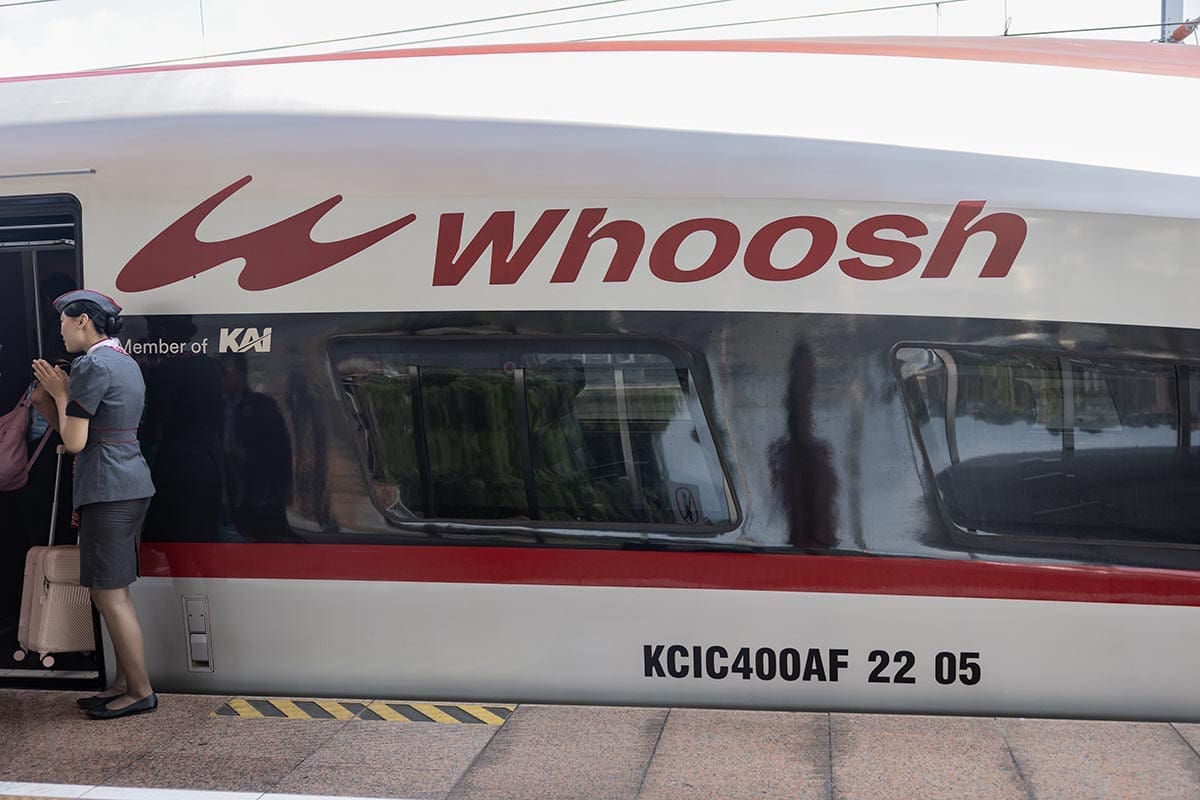
First, a couple of rules I’ve used to design this journey. Mostly, we’ll be using trains as the primary mode of transport. I’ve discounted cars and scooters because driving in Indonesia is manic. I’ve also (mostly) discounted plane travel for reasons of cost and experience. Indonesia’s trains are cheap, and travelling through its beautiful countryside is a much better experience than flying over it at thirty thousand feet.
The one exception to this is when we travel to Flores from Bali. The one-hour flight versus a twenty-four hour ferry was a simple decision.
Both Java and Bali are fascinating islands, so to do justice to them, this Bali to Java itinerary takes fifteen days. If time is short, remove the Komodo leg, which cuts it to twelve days.
The Do Not Go Gently Travel Blog uses affiliate links. If you make a purchase after clicking on one of these links, I may receive a small commission payment at no extra cost to you.
I recently spent two months travelling through Indonesia and Malaysia. When researching and planning the trip, these are the main resources I used.
Hotels – Booking.com
Tours and Activities – GetYourGuide
Travel Guide – Lonely Planet – Indonesia (Amazon)
Arriving in Bali
International flights to Bali arrive at Ngurah Rai International Airport near Denpasar. Entry into Indonesia requires two things. First, you need to complete a landing card, which can only be completed within 72 hours of landing. The second is a Visa on Arrival.
The Visa on Arrival is available for citizens of almost 100 countries. It costs 500,000 IRP (approximately £20). This can be obtained at the official Indonesian Visa site (recommended), or when you land at the airport.
Pro Tip: If you get it in advance, you can use the electronic gates and save yourself half an hour queuing for the manual immigration booths.
Both can be obtained from the official Indonesian Immigration page.
Getting Away from the Airport
Many Bali hotels offer a shuttle or transfer service from the airport. Alternatively, Indonesia has great service from rideshare apps. The biggest is Grab, and you’ll find their staff and a lounge/drop off point at every airport and major train station across Indonesia. Download the app before travelling, connect to the airport Wi-Fi or your e-SIM, and book a transfer. If you don’t already have an esim, my preferred option is Yesim, competitive and easy to use.
If you have any problems, the Grab staff are really helpful.
Day 1-3: – Ubud
Traffic in Indonesia is terrible, traffic in Bali is horrific! Pretty much everywhere is an hour and a half away from everywhere else, no matter the distance. I’ve chosen Ubud because of its proximity to the major sites, and because it’s a pretty cool place in itself.
because of its proximity to the major sites, and because it’s a pretty cool place in itself.
Best Places to Stay in Ubud
Budget – The Compass Rose
Mid-range – Purana Suite Ubud
Luxury – Fivelements Retreat Bali, Ubud
I’ve made Day 1 a relatively quiet day to shake off the travel cobwebs. After checking into your accommodation. Explore the historic town of Ubud.
First up is the royal palace and temple complex. Rebuilt because of earthquake damage in 1917, don’t expect Versailles. Instead, the palace complex gives you a view of traditional Balinese architecture.
Day 1 – Ubud

At dusk, try and catch the famous Fire Dance. Steeped in Hindu mythology, it tells the story of Ramanyana who is denied the throne by his wicked stepmother. The monkey-god Hanuman helps him in his fight after his wife Sita is kidnapped. The dance includes a chorus of up to 100 loin-clothed men who maintain a rhythmic chant through out.
Another place to see this dance is Uluwatu temple where it is performed on a cliff top with a glorious sunset as a backdrop.
Day 2: Temples and Monkeys

Today will be our first proper look at Bali’s beautiful countryside. Ubud is the perfect base from which to explore the temples and rice terraces of south Bali.
Pura Lempuyang Luhur
Perched high on the slopes of Mount Lempuyang in eastern Bali, Pura Lempuyang Luhur is one of the island’s oldest and most sacred Hindu temples. The temple is famous for its iconic “Gates of Heaven,” designed to frame the towering silhouette of Mount Agung perfectly. While many visitors stop at the famous gateway, the full temple complex extends much higher up the mountain. The reward for braving the 1,700-step climb through the forest is a stunning view. Arriving early in the morning offers the best light, cooler temperatures, and fewer crowds.
The Sacred Monkey Forest Sanctuary
The Sacred Monkey Forest Sanctuary is an iconic Bali attraction. Part nature reserve, part temple, it’s home to over 1200 long-tailed macaques. This monkey species is sacred to the Balinese, and the Balinese protect them.
However, they have become increasingly aggressive in begging for food and will steal anything not nailed down. Glasses, caps, and bags are all prime targets for them. Some even appear to have worked out the concept of blackmail, offering the items back for food!
If possible, leave items like glasses in your transport, give the monkeys a wide berth and do not touch, or even make eye contact with them. An Australian tourist told me that a macaque had badly bitten him on the shoulder. The five rabies shots he faces aren’t fun.
Tirta Empul Temple

This tenth-century Hindu temple is among the most important to the Balinese. Dedicated to Vishna, the god of water, it’s famous for its sacred spring.
Ticketing for this temple is two tier. The general ticket gives access to explore the temple, but not to the sacred pool. I recommend the enhanced ticket, which allows you to take part in the Melukat Ceremony. The ticket price includes ceremony-specific clothing and offerings.
This purification ceremony takes place at the sacred pool. Participants must wear the sarong provided while immersing themselves in the holy waters. Prayers and offerings help cleans away negative energies.
Day 3: Discover the Natural Beauty of Northern Bali
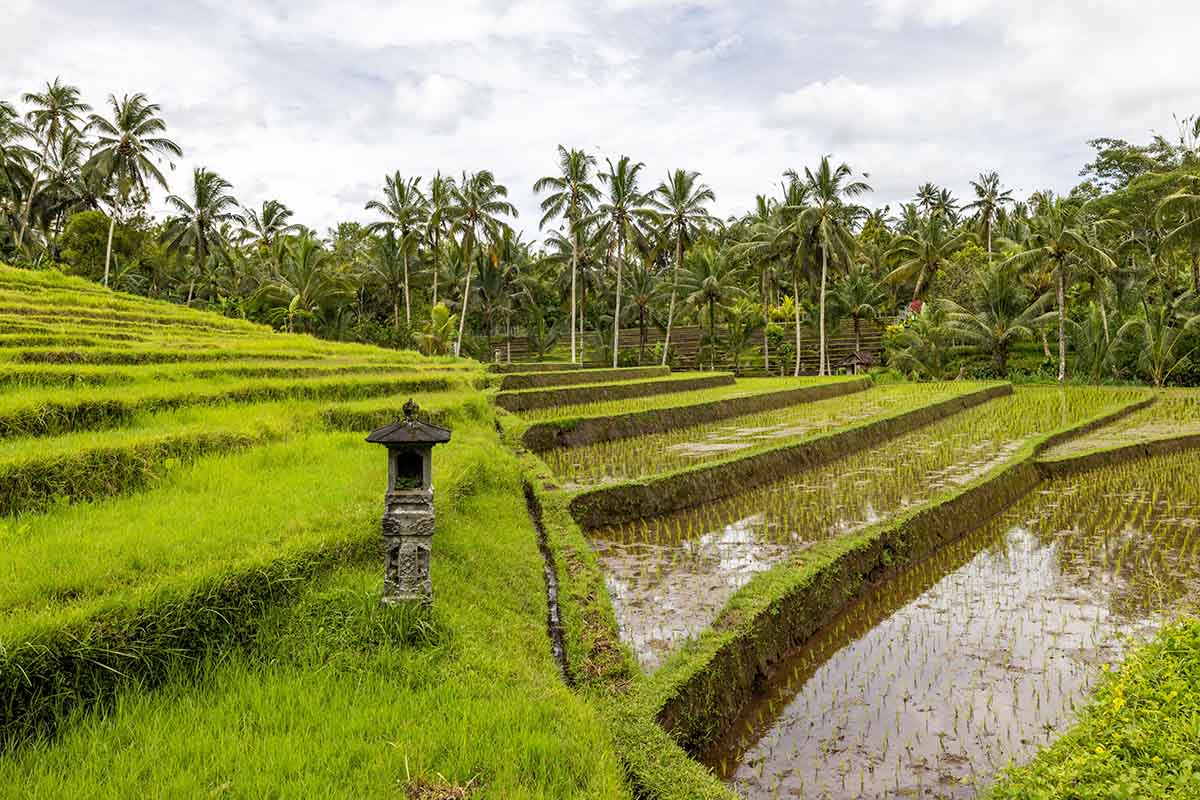
On our final full day in Bali, we’ll leave the busy south behind and head into the island’s cooler central highlands. A day trip through northern Bali showcases some of the island’s most spectacular scenery. Today, we’ll see emerald rice terraces, volcanic lakes, and cascading waterfalls hidden deep within the jungle.
We’ll begin our morning at the Jatiluwih Rice Terraces, a UNESCO World Heritage Site famous for its stunning scenery and traditional irrigation methods. Jatiluwih is less crowded than the well-known Tegallalang, (we could have visited there yesterday) making it ideal for peaceful strolls among the green paddy fields.
Continue to the shores of Lake Beratan, where the iconic Ulun Danu Beratan Temple appears to float on the water. Surrounded by mist-covered mountains, this beautiful Hindu temple is one of Bali’s most photographed landmarks. It’s particularly atmospheric in the morning when the lake is calm.
After lunch in nearby Bedugul, travel west towards Munduk, a charming mountain village known for its coffee plantations, clove trees, and cooler climate. Don’t forget to try Kopi Luwak, where the beans are eaten, digested and excreted by a mongoose!
Scenic walking trails dot the surrounding countryside, leading to waterfalls like Munduk Waterfall and the exquisite Banyumala Twin Waterfalls. If time allows, enjoy a refreshing swim beneath the falls or simply relax while taking in the peaceful surroundings.
As you make your way back to Ubud, stop at one of the roadside cafes overlooking the mountains for a caffeine top-up from more excellent Balinese coffee. Alternatively, try locally grown strawberries, another speciality of the region.
Alternative Option – West Bali National Park

An alternative day in North Bali is an exploration of the West Bali National Park. This protected area is home to many rare bird species. This is the only place that the critically endangered Bali Starling, the national bird of the island, can be seen.
This relaxed day is a nice change from Bali’s busy beaches and shows you what island life is like away from the coast. It’s the perfect finale to our time on Bali. From here, we fly to Flores in search of the fearsome Komodo dragon.
Day 4-6: Flores and the Komodo Islands
Although this Bali to Java itinerary promises ground travel and focuses on those two islands, it would be criminal not to detour to the Komodo Islands. Boat travel for this leg of the itinerary isn’t realistic, so we’ll take the short flight instead. An early flight from Denpasar to Labuan Bajo will take us to our floating accommodation for the next leg of the itinerary.
The next 3 days we’ll be exploring the Komodo National Park aboard a traditional pinisi boat. These boats have been plying these waters for centuries, but don’t worry. Today, they come equipped with comfortable cabins, great food, Wi-Fi, and even karaoke!
The Komodo Islands are not only stunningly beautiful, but they are the only place on the planet to see the world’s largest lizard, the 10-foot long Komodo dragon.
Check out this post for more details on how to see these magnificent alpha predators.
Other natural highlights include swimming with manta rays and reef sharks, seeing thousands of flying foxes, and the beautiful pink beach.
Day 4: Flores
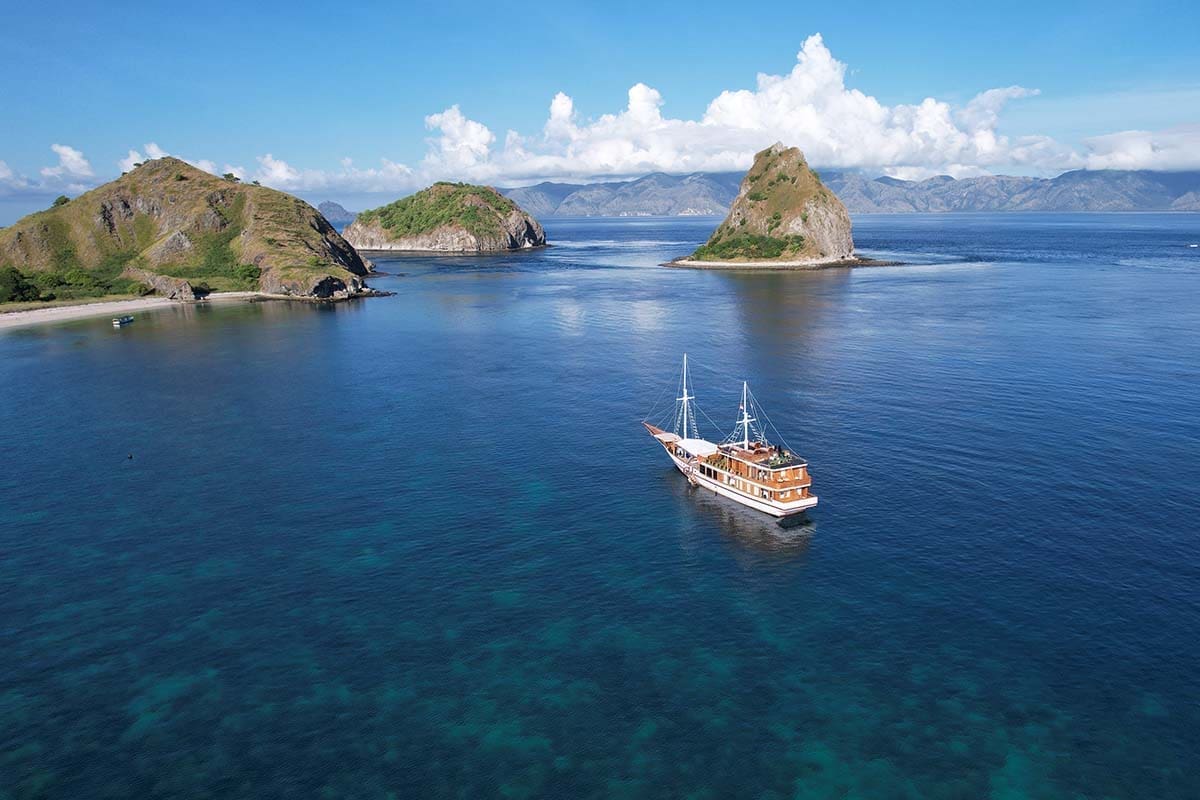
Our first day on board sees us motoring away from Flores harbour out towards the Komodo Islands.
First up is snorkelling at Manta Point, where huge manta rays swim by you as you watch them and other colourful fish in the crystal-clear waters. If you’re especially lucky, you’ll spot a turtle as it glides by.
From here, the boat will cruise to Padar Island to moor up for the night while you watch the glorious sunset before dinner aboard.
Day 5: Komodo Islands
An early start this morning with a gentle hike to the viewpoint on Padar Island to watch the sunrise. You’ll have built up an appetite for breakfast on board while the boat sails to the Pink Beach. This sand’s colour originates from the coral reef.
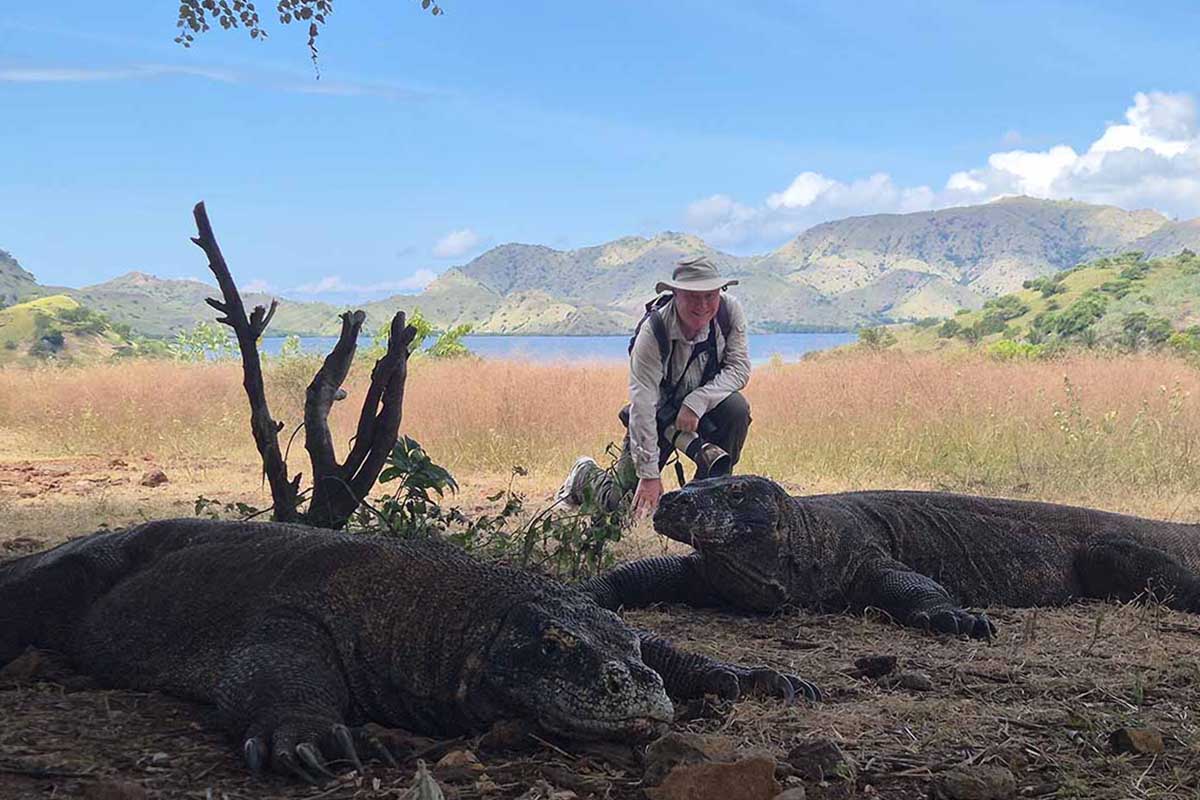
From Pink Beach, you’ll head to the main attraction. Komodo Island, home to the fearsome Komodo dragon, the world’s largest lizard. Local guides with forked sticks will keep you safe as you get up close and personal to these alpha predators.
The evening sees another beautiful sunset and a spectacular aerial display. Hundreds of flying foxes leave their daytime roosts and cross the bay above your head on their way to their nighttime hunts.
After dinner, the boat’s crew may break out the karaoke gear…
Day 6: Flores
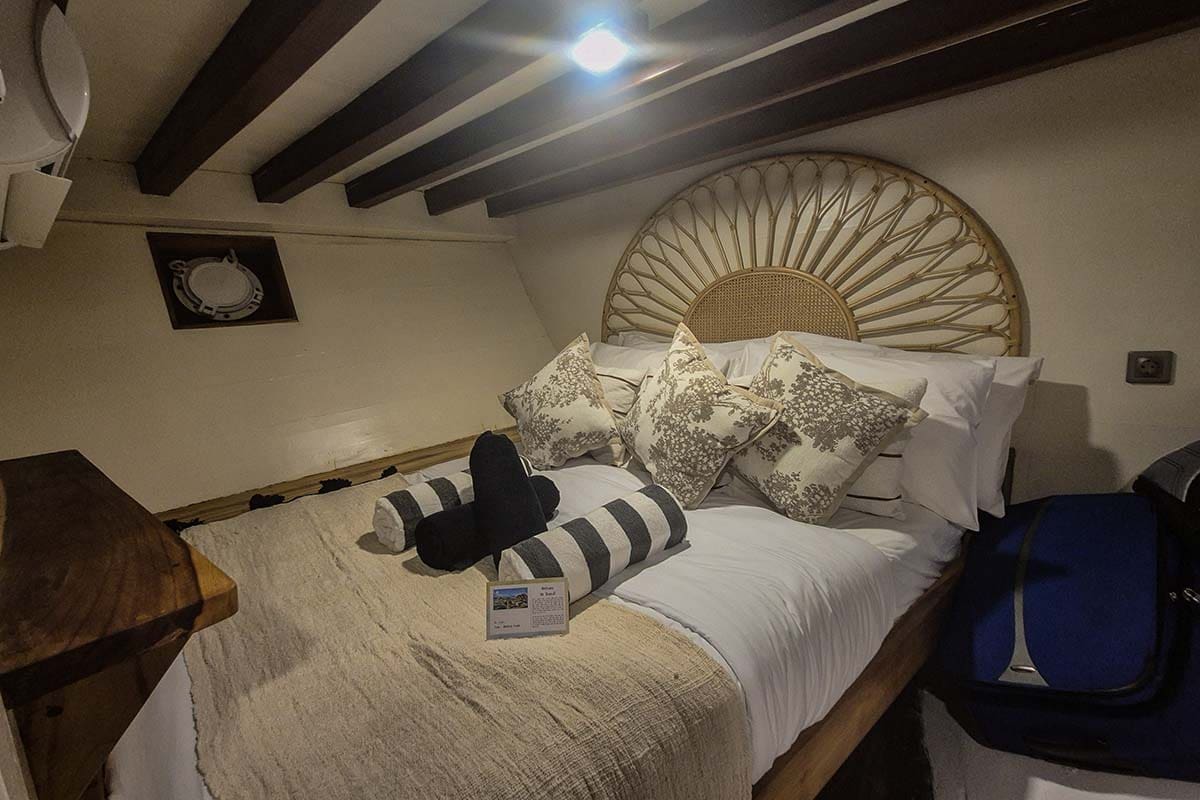
After a final night being rocked to sleep in your beautifully appointed cabin, there’s more to see and do on the last day.
Some more snorkelling is on the agenda, this time with reef sharks. Sounds scary, but the black tip reef sharks here are very docile.
After a final lunch on board, the boat will take you back to Labuan Bajo for a flight back to Bali to continue this Bali to Java itinerary.
Day 7-8: East Java
Day 7: From Bali to Java
Today, we say farewell to Bali and take the ferry north to the island of Java. The ferry goes from Gilmanuk to Ketapang and takes about 45 minutes. Ketapang train station is about a 5-minute walk from the ferry terminal, but you can take a cab, or one of the rickshaw-like becaks.
From here, we’ll board the train from Ketapang to Banyuwangi. For more details on how to book and travel by train in Java, check out this post.
Best Places to Stay in Banyuwangi
Budget – PaddyView Hostel
Mid-range – Kosasih 1919
Luxury – Ketapang Indah Hotel
Banyuwangi is a hidden gem, virtually unknown by tourists, although it is gaining in popularity. It’s a great access point to some of Java’s most spectacular scenery.
Orient yourself with an afternoon/evening’s exploration. Check out the waterfront and the Javanese street food on offer.
Day 8: Ijen Volcano and Scenic Rail Journey
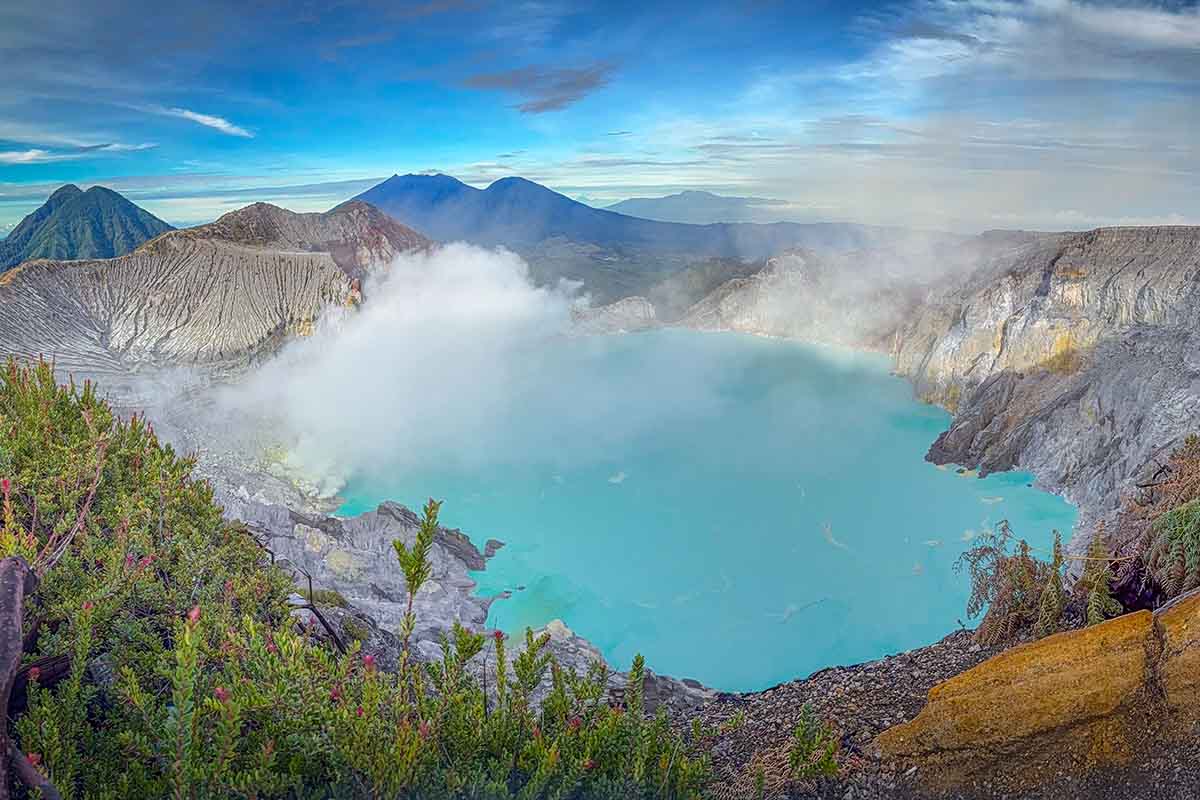
The main reason for Banyuwangi’s higher profile with western tourists is its proximity to the Ijen volcano. Ijen volcano is one of only two places in the world where you can see the jaw-dropping blue fire display.
To witness this phenomenon, a nighttime hike is required. The climb to the top of the volcano takes about 1.5 to 2 hours, with a more difficult 45-minute scramble down into the caldera and climb back up. Because of the toxic nature of the environment, it’s compulsory for visitors to wear industrial face masks when visiting Ijen.
The blue fire is a phenomenon caused by sulfuric gases escaping from fissures in the rock. When heat from the volcano ignites the gases, they burn with an eerie blue colour. These jets of blue flame can reach five metres long.
As the sun comes up, the blue flame dims and the lake inside the caldera comes to the fore. The largest acid lake in the world, the water shines a turquoise colour in the sunlight.
The lake is also home to a labour-intensive sulphur mining industry. Should you come across the miners carrying sacks of sulphur up the narrow and uneven track, step aside. Their packs weigh 90kg, and their wages for this back-breaking and dangerous work are about £10 a day.
Back on the Train
After a quick snooze back at the hotel, our 15-day Indonesia itinerary continues with a beautiful train journey to Yogyakarta, Java’s cultural hub. The scenery on this trip is so stunning, it’s worth paying the extra to book one of Indonesia trains’ famous panoramic carriages.
These train cars feature extra-large windows, glass rooves, and seats which rotate 90 degrees to face the scenery. Find out more about Indonesia’s train options in this blog post.
Day 9-11 Yogyakarta
Best Places to Stay in Yogyakarta
Budget – Collection O 3468 Ndalem Gusti Ayu
Mid-range – Ceria Hotel (Highly recommended)
Luxury – The Phoenix Hotel Yogyakarta
Known locally as Jogja, Yogyakarta is the cultural soul of Java.
It combines royal history, traditional arts, remarkable temples, and some of Indonesia’s finest cuisine.
Day 9 – Exploring the City and Mount Marapi

We’ll spend today discovering the cultural heart of Yogyakarta, a royal city. The region is officially known as the Special Region of Yogyakarta, and is the only Indonesian region still ruled by a Sultan.
We’ll start at the Kraton, the Sultan’s Palace, which remains his official residence. Wander through its elegant courtyards and pavilions, where exhibitions showcase Javanese history, royal heirlooms and traditional arts. If you’re fortunate, you may also catch one of the daily performances of gamelan music or classical Javanese dance.
Prince, (now King) Charles visited here with Princess Diana in 1989 when they toured Indonesia.
A short walk away lies Taman Sari, better known as the Water Castle. Built in the 18th century as a royal retreat, this fascinating complex of pools, gardens, tunnels and hidden chambers once served as both a pleasure garden and a defensive stronghold. Today, it offers a glimpse into the lavish lifestyle of Yogyakarta’s former rulers and is one of the city’s most photogenic attractions.
We’ll finish our tour on Malioboro Street, Yogyakarta’s lively shopping and entertainment district. Market stalls selling batik clothing, handmade crafts, souvenirs, and local street food line this bustling street.
Mount Merapi
It’s volcano time again this evening. Merapi, Indonesia’s most active volcano, is a couple of hours from Jogja. The last major eruption was in 2010, when 350 people lost their lives. Today, the mountain’s activity is rated as a 3 (on an ascending scale where 4 means run for your life!). This means that it’s too dangerous to climb the mountain itself. Fortunately, a viewpoint exists a few kilometres from the summit. To reach the platform, an hour-long climb on concrete steps is required. The steps are well paved and have hand rails, making it achievable by most people with an average level of fitness.
At the top is a vantage point with a spectacular view of the volcano, which regularly spews red-hot lava.
Day 10 Borobudur and Street Food

Day 10 of our Bali to Java itinerary sees us visiting a highlight of the tour. Borobudur, built in the 9th century, is the largest Buddhist monument in the world and a UNESCO World Heritage Site.
Visitors can explore the site and climb the 9 levels of the temple to view the reliefs, statues of Buddha, and the 240 stupas. The temple receives 3.5 million visitors annually, so tourists are required to wear upanat sandals to protect the ancient stones. The design of these palm-leaf sandals was scientifically modelled for optimal results. Further research showed that a 9th-century temple relief actually pictured an identical design!
You can visit at any time during the day, but I recommend booking a dawn tour. Seeing the sunrise from the top of Borobudur is a bucket-list experience. Make sure you book a tour that guarantees a sunrise temple climb because they strictly limit the numbers.
After the day’s temple climbing exertions, you’ll have built up an appetite. This evening, we’re going back to Malioboro Street to explore Jogja’s famous street food scene. The city’s charm really comes alive at night, with musicians, food vendors, and horse-drawn carriages making the atmosphere more vibrant. It’s the perfect place to soak up the local atmosphere and sample traditional Javanese cuisine.
Yogyakarta’s Famous Street Food

We may be on Java now, but ‘Bali belly’ is still a risk. So, to make sure we only hit the best places, I recommend taking an organised tour. I found the one below excellent, and we sampled Jogja’s signature dish, gudeg, a delicious jackfruit-based curry. We also tried Kopi Jos, coffee with red-hot charcoal added, and lumpia samijaya, a root-vegetable based spring roll with garlic spread on top.
Day 11: Prambanan and Alun Alun Kidul

The other jewel in Jogja’s crown is the Hindu temple at Prambanan. Like Borobudur, it dates all the way back to the 9th century and is a UNESCO World Heritage Site. Unlike Borobudur, it isn’t a single temple, but a complex of hundreds. The pointed rooves reaching to the sky reputedly mirror the shape of the Himalaya mountains. You’ll notice a similarity in style to the grand temple at Angkor Wat, and Prambanan is second in size only to it.
Covering over 40 square kilometres, the temple complex is made up of hundreds of temples of various sizes. Many have toppled because of the constant earthquakes the region suffers from. Crucially, the three primary structures remain after archeological restoration last century.
The three main temples are dedicated to the Hindu trinity of Shiva, Vishnu, and Brahma. This complex is often combined as a day trip with Borobudur, but both sites are so significant, I’ve split them into two separate visits. I’d also recommend taking one of the local guides to see the complex. These experts can discuss Prambanan and its place within the broader context of Hindu religious architecture.

In the evening, we’ll take advantage of the slight drop in temperature and stroll to the Kraton’s southern square, Alun Alun Kidul. Here, we’ll find the locals enjoying the vast grass expanse dominated by two massive banyan trees. Around the square, you’ll find Alun Alun Kidul’s signature attraction. The neon-lit pedal cars (odong-odong). Brave the scooters and pedal around the square with a flashing unicorn or a snarling dinosaur above your head.
Another tradition of the square is a game played by the locals. If you can walk between the two banyan trees, you are (allegedly) pure of heart and will have all your wishes granted. There is a catch, however, you need to do it blindfolded!
Day 12-14 Java’s Highlands
Day 12: Train to the Highlands

Today, we take our leave of Jogja and board the train for one of Indonesia’s most scenic train journeys. You really must take the panoramic carriage for this journey.
We head back across Java, trending north into the highlands to Bandung, the capital city of West Java. As the journey progresses, the temperature drops and the vegetation changes. This area is famous for its tea growing. As we climb, the train crosses high bridges and runs between tea plantations.
Best Places to Stay in Bandung
Budget – OsteL By OstiC
Mid-range – Favehotel Braga (Highly recommended)
Luxury – Avery De Grand City Hotel
The journey takes about six hours and will get us into Bandung in the late afternoon. Book a hotel in the Braga area of Bandung for lively nightlife and colonial Dutch architecture. My favourite is Favehotel Braga, a quirky, modern hotel right in the heart of the action
Day 13: Discover Colonial Bandung

Bandung, which sits at an altitude of over 2000 feet above sea level, is located in a river valley. The surrounding mountains form a perfect defensive wall, the reason the Dutch East India Company founded the city.
The Dutch influence is easy to see in Bandung, with evidence of their architecture obvious in the Braga area. You’ll also find the Art déco hotel, the Savoy Homann Bidakara, which Charlie Chaplin made famous during his visits to Indonesia.
Bandung is also famous as the location of the seminal 1959 Asia Afrika summit when 29 newly independent countries. The AsiaAfrika museum, along AsiaAfrika Street, lined with ‘cannon balls’ with flags of the nations who attended, is fascinating.
Near here is the Grand Mosque of Bandung, where I was lucky enough to be invited for coffee by the Director, a fascinating man. Finally, explore the Banceuy Prison where Sukarno and his nationalist colleagues were imprisoned before he became Indonesia’s first president.
Day 14: Volcanoes and Tea Country

Today, we’ll explore the stunning countryside around Bandung. Expect desolate volcanoes, hot springs, and beautiful tea plantations.
The first stop will be the vast crater of the Tangkuban Perahu volcano. First, we’ll view its barren, smoke-filled landscape from above to get an impression of the sheer scale of the volcano. Next, hire a guide for the descent into the sulphur-drenched crater (unlike Ijen, you won’t need a face mask).
The walk down is surprisingly pleasant and tree-lined, but fairly steep. If you’ve got a driver, ask him to meet you at the bottom. This will save you the lung-busting climb back to the top.
The floor of the crater resembles the surface of the moon, apart from the heat and the steam rising from fissures in the ground. The heat from geothermal activity allows food to be cooked.
Pools in the primary crater are dangerously hot, but you can find spas offering hot spring bathing further down the valley. Try the Domas crater, or the Ciater hot springs.
Time for Tea
The Perkebunan Nusantara VIII is our next stop. The tea plantation is now nationally owned, but the original plantation dates back to the Dutch colonists in the 19th century.
The walk through the beautiful plantation is stunning. After two weeks in Indonesia’s sweltering heat, the crisp mountain air is a refreshing change.
Guided tours here give an insight into the history of tea making in the region from colonial times through independence to the present day.
Other things of interest in the area are the spectacular Curug Cimahi Waterfall and the slightly more touristy Floating Market. The latter is more of a theme park, but a decent option for lunch.
Day: 15 Jakarta

For the last day of our Bali to Java itinerary, we’ll take a trip north on the jewel in the crown of the Indonesian train service. The aptly named Whoosh is Southeast Asia’s fastest train and will whisk us north to the capital in around 45 minutes. The standard service takes about three hours.
Best Places to Stay in Bandung
Budget – PassGo Thamrin
Mid-range – Jambuluwuk Thamrin Hotel
Luxury – The Orient Jakarta
Once in Jakarta, a tour of this fascinating city is the order of the day. Jakarta, as the capital city, is jam-packed with interesting monuments. Jakarta may not be the capital for too much longer. It’s sinking, and the government has unveiled controversial plans to move the capital to Borneo, where a new city is being prepared.

Before that happens, make sure you see:
- National monument (don’t climb it, the view’s better at the library)
- National Library (seriously, it’s superb)
- Batun – the heart of the original Dutch colonial city
- Istiqlal mosque
- Jakarta Cathedral
- Sunda Kelapa Harbour
We’ll complete our Bali to Java itinerary with a final exploration of Indonesia’s street food.
Bali to Java Itinerary – Final Thoughts
I’ve put this Java to Bali itinerary together after spending two months in the region. I’ve combined some of Indonesia’s greatest highlights into one unforgettable journey. From the rice terraces of Bali and the legendary Komodo dragons of Flores to the temples of Yogyakarta, the volcanoes of East Java and the cool highlands of Bandung, it showcases the extraordinary diversity of the archipelago. I’ve also tightened it up from my journey. E.g. whereas Surabaya was interesting, there wasn’t much for tourists.
By including ferry crossings, scenic rail journeys, and different types of train transport, the travelling is part of the adventure.
For travellers seeking a deeper, more immersive experience of Indonesia, few routes offer such a rewarding blend of culture, history, food, wildlife and landscapes.
Latest Posts from Indonesia


More Itinerary Posts…


