

How to See Komodo Dragons
This guide written by a published wildlife photographer answers the question, “How to See Komodo Dragons”
Few wildlife experiences feel as prehistoric and unforgettable as seeing a Komodo dragon in the wild. These giant reptiles, found only in a small corner of Indonesia, are the world’s largest lizards and one of the most fascinating creatures on Earth. Watching one lumber across a dusty trail, flicking its tongue as it searches for prey, feels like stepping back to prehistoric times.
For many travellers, seeing Komodo dragons is the highlight of a trip to Indonesia. Yet planning the experience can be surprisingly confusing. Which islands should you visit? Is it better to take a day trip or a liveaboard boat? When is the best time to go? And how dangerous are Komodo dragons, really?
This guide explains everything you need to know about how to see Komodo dragons, including where to find them, how to visit responsibly, what tours cost, and what to expect during your adventure.
The Do Not Go Gently Travel Blog uses affiliate links. If you make a purchase after clicking on one of these links, I may receive a small commission payment at no extra cost to you.
I recently spent two months travelling through Indonesia and Malaysia and fulfilled a long-held ambition to see Komodo dragons in the wild. When researching and planning the trip, these are the main resources I used.
Hotels – Booking.com
Tours and Activities – GetYourGuide
Travel Guide – Lonely Planet – Indonesia (Amazon)
What are Komodo Dragons?
Komodo dragons are the largest living lizards on the planet, and this blog post will tell you everything you need to know about how to see Komodo dragons.
These modern-day dinosaurs can reach 3m (10 feet), weigh 90kg (200 lbs), they are excellent swimmers and can run at 15mph in short bursts.
They are stealth predators, hiding with crocodilian patience until their favoured prey, wild boar or Sunda deer, comes along. They attack this prey with an explosive burst of speed and a venomous bite which can kill a human. Once bitten, it’s game over for the prey and the dragon, which can smell blood from 6 miles away, can hunt it down at its leisure.
Where can I see Komodo Dragons?

Although fossil records show Komodo dragons once lived in Australia, people can now only see them on a few of the Komodo Islands. They are critically endangered because of habitat loss and poaching of their preferred prey, but the population has recovered a little since strong governmental protections were put in place.
Visitors can see Komodo dragons on several island including:
- Komodo Island
- Rinca Island
- Flores Island
- Gili Motang
- Nusa Kode.
Realistically though, Komodo Island and Rinca Island are the two most likely, with dedicated tours set up to give the best chance.
Rinca Island is popular for day trips from Flores as it is closer and, because of its smaller size, has a higher concentration of dragons. This makes them easier to see in the wild.
Komodo is the iconic location to see dragons. They are larger here, and there is a better infrastructure for visitors. It is, however, a four-hour boat ride from Flores.
There are two options for seeing Komodo dragons on the island of Komodo. The easiest is near Komodo village itself, where they can be found lounging around close to the community. Local guides will take you around the village, large forked sticks at the ready. To ensure safety and to support the local economy, you cannot wander off solo.
My preferred option was to take a short hike through the jungle, again with a qualified guide. This is a more natural wildlife encounter, and the chance of seeing other bird and animal life increases.
The village does offer homestays for those who want an extended visit to Komodo Island, or the option to see the dragons before the hordes arrive from Labuan Bajo.
When is the Best Time to see Komodo Dragons?

Komodo dragons can technically be seen year-round, but the dry season (April to November) offers the safest and most comfortable conditions for exploring Komodo National Park.
For most travellers, the ideal months are:
May to August: Sunny weather, calm seas and excellent hiking conditions
September to October: Fewer crowds, beautiful dry landscapes and strong wildlife viewing opportunities
Komodo dragon mating season usually takes place between May and August in Komodo National Park.
During this period, male Komodo dragons become more active and aggressive as they compete for females. Visitors may occasionally witness:
- Territorial fights between males
- Courtship behaviour
- Indreased dragon movement around the islands.
Females typically lay eggs in September, often using abandoned mound nests created by megapode birds. The eggs incubate for around eight months, and hatchlings usually emerge between April and May at the start of the wet season. Young dragons are vulnerable to adults, so spend a lot of time in the trees where the full grown dragons can’t reach them.
For travellers interested in wildlife behaviour, the mating season can be an exciting time to visit because dragons are often more visible and active. However, it is also important to follow ranger instructions carefully, as males can become more aggressive during this period.
Day Trips to see the Komodo Dragons
Labuan Bajo on Flores is the centre from which tourists can take day trips to Komodo Island. Flores can be reached via a short flight from Denpasar airport on Bali. Fast boats leave early from the port and take in several activities which include a chance to see the dragons.
A typical itinerary includes:
- Padar Island – early morning hike for stunning views
- Pink Beach – visit the naturally pink sands of this beautiful beach
- See the dragons – search the jungles with expert guides to find the world’s biggest lizards
- Swim with manta rays – snorkel with these incredible fish
- Visit the Pulau Makassar atoll
- Snorkelling at Kanawa Island.
Normally, day tours utilise speedboats to cover the large distances involved for day tours. They offer a fun, exhilarating ride, but may not be suitable for people who suffer from seasickness or back problems. The biggest disadvantage, of course, is the shorter time available to search for dragons.
Three-Day Tours to See Komodo Dragons
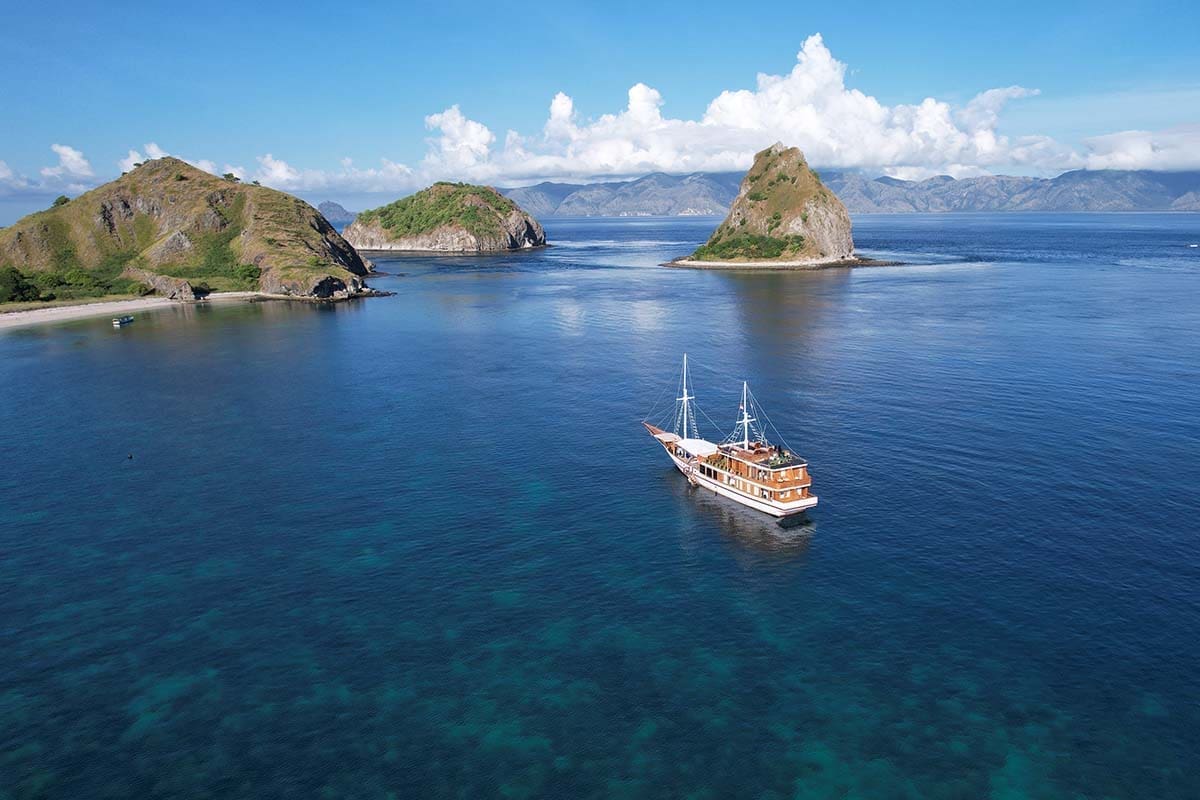
A more relaxing and romantic answer to the question, ‘How to see Komodo Dragons’ is to take a longer tour on a Phinisi boat. You can take a leisurely three-day (two-night) tour on these traditional Indonesian two-masted wooden boats.
These usually include a variety of cost options, from 4 bed shared dorms to double cabins. The standard of the boat can also vary from basic to luxury. Consider the level of the boat carefully. The lowest-end boats may sacrifice safety features for cost savings.
The tour includes two nights sleeping aboard the boat. They serve all meals, which are generally excellent. The boats are graceful (although they use the engine rather than sail) and smooth, making seasickness less of an issue.
Expect a slower pace during this three-day excursion, which hits all the key attractions of the shorter trip.
You may get a photographer with your tour package who takes pictures of your trip, including drone shots, and provides them digitally.
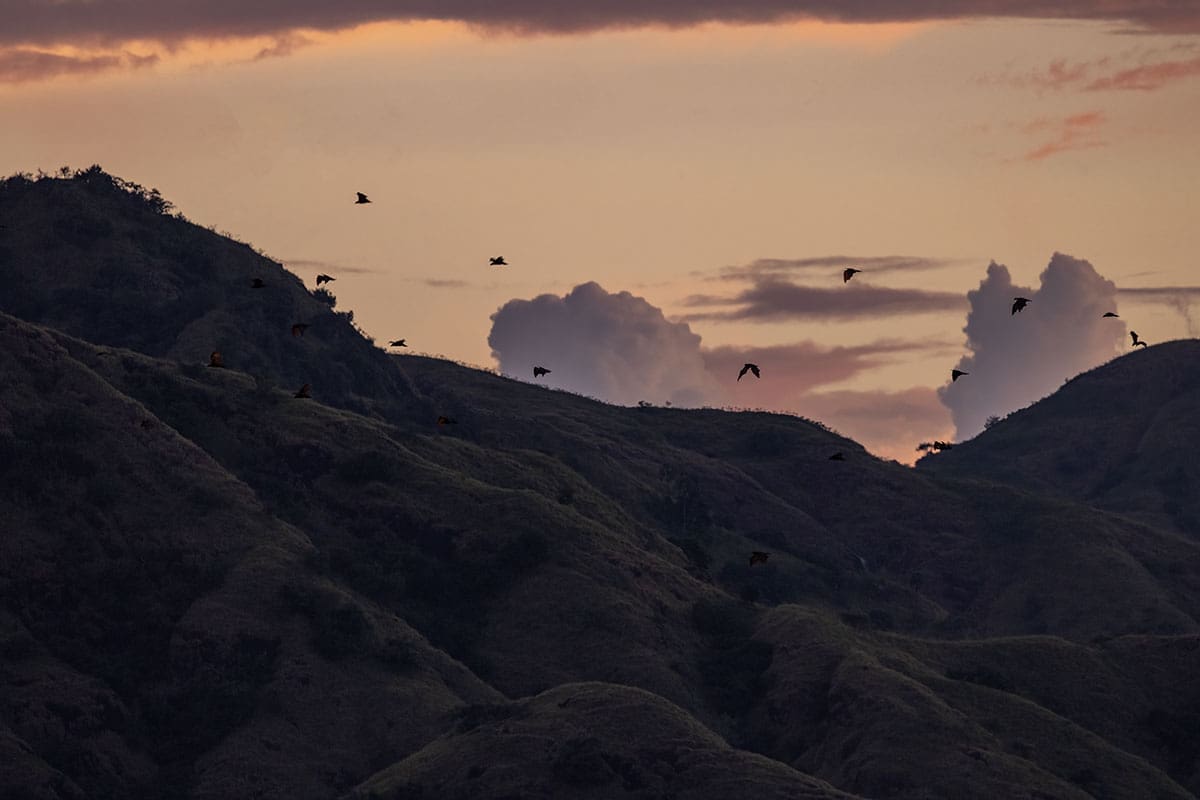
Another advantage of the longer trip is the addition of ‘Bat Island’ to the itinerary. The boats (and there will be a lot of them) anchor off Kalong Island to view one of the most spectacular displays in Indonesian nature.
As dusk falls and the stars come out, literally hundreds of Sunda flying foxes leave their roosts in the forest and fly over your head to hunt.
How Close Can You Get to Komodo Dragons?

Visitors can sometimes get surprisingly close to Komodo dragons, but strict safety rules apply.
All walks are conducted with trained rangers carrying forked sticks designed to deter aggressive dragons if necessary.
Typical viewing distances vary from a few metres to much further away, depending on conditions and dragon behaviour.
Never attempt to:
- Approach a dragon independently
- Feed them
- Stand between dragons
- Turn your back on one nearby
- Wander away from the group.
Despite their slow appearance, Komodo dragons can move very quickly.
What Does a Komodo Dragon Tour Cost?
Prices vary significantly depending on comfort level and tour length.
Budget Day Tours
Shared speedboat tours typically range from:
- £60–£120 per person
These usually include:
- Guide
- Transport
- Snorkelling gear
- Lunch.
Mid-Range Liveaboards
Two or three-day shared boats often cost:
- £150–£400 per person (dependent on boat and accomodation option).
Luxury Cruises
High-end liveaboards can exceed:
- £1,000+
Luxury options may include:
- Private cabins
- Fine dining
- Diving facilities
- Professional photography
Is Komodo National Park Suitable for Older Travellers?
Yes, many older travellers successfully visit Komodo National Park. However, it helps to understand the physical demands involved.
Potential challenges include
- Steep boat ladders
- Uneven hiking trails
- Heat and humidity
Many operators offer more comfortable premium boats with easier access and private cabins.
Travellers concerned about comfort should avoid the cheapest backpacker boats.
Can You See Komodo Dragons Without a Tour?
Realistically, no. It is possible to book a homestay on Komodo Island. However, independent travel withing the national park is highly restricted making the logistics of getting there difficult. Trekking without a ranger is illegal.
These barriers make organised tours the most convenient options to see Komodo Dragons
Photography Tips for Seeing Komodo Dragons
Wildlife photographers should prepare carefully.
Best Camera Gear
The usual wildlife photography equipment can be useful, zoom lens, wide-angle lens etc, but the chances are, you’ll get close enough to the dragons to take a photograph with your mobile phone.
I would also recommend investing in a dry bag. This will protect your expensive gear when transferring from the phinisi boat to the smaller landing boat, and from boat to shore. Landing jetties aren’t always available, and a small amount of paddling may be necessary.
Best Lighting
Early morning and late afternoon provide the best conditions.
Midday sunlight can be extremely harsh. A polarising filter can help.
Respect Wildlife
Never pressure guides to get dangerously close for photographs. Always listen to their instructions (and, when in close proximity to the dragons, stay away from the pointy end!)
Ethical wildlife photography should always prioritise animal welfare and human safety.
Final Thoughts on How to See Komodo Dragons
Understanding how to see Komodo dragons involves much more than simply booking a boat trip. Choosing the right season, selecting a responsible operator, and allowing enough time all make a vast difference to the experience.
For most travellers, the ideal approach is to base yourself in Labuan Bajo and take a three-day live-aboard tour through Komodo National Park. This provides the best balance of wildlife encounters, scenery, snorkelling and relaxation. Of course, if you don’t have enough time, a day trip is better than missing seeing Komodo dragons.
Seeing a Komodo dragon in the wild is not just another sightseeing activity. It is one of the planet’s great wildlife experiences, a chance to see a powerful ancient predator that exists nowhere else on Earth.
Whether you are a wildlife photographer, solo traveller or simply someone seeking adventure, Komodo National Park offers an unforgettable journey into one of Indonesia’s most extraordinary landscapes.
Latest Posts from Indonesia


Nature & Wildlife Posts


