

The 10 Best Things to do in Tokyo
Tokyo, the world-famous capital of Japan, isn’t really a city, it’s a metropolis made up of 26 cities (plus 5 towns and some villages). Each of these cities has its own vibe, symbol, and even jingle. This guide unlocks the best things to do in Tokyo, navigating one of the world’s premier destinations.
This guide has something for everyone. Whether you’re a first-time visitor, a culture vulture or a foodie, you’ll find something here.
Read on to find a carefully curated list of the very best things to do in Tokyo, written by someone who fell in love with the city and its people.
The Do Not Go Gently Travel Blog uses affiliate links. If you make a purchase after clicking on one of these links, I may receive a small commission payment at no extra cost to you.
I recently spent nearly two months in Japan and explored many of its islands from Okinawa and Amami in the south, through the main islands to the Hokkaido in the frozen north. When planning trips, here are the resources I use.
Hotels – Booking.com
Tours and Activities – GetYourGuide
Travel Guide – DK Japan (Amazon)
Bird Field Guide – Field Guide to the Birds of Japan (Helm Field Guides) (Amazon)
Explore the Historic Yanaka District

The image most people have of Tokyo is a brash, shiny modern metropolis, ultra-high tech and with dazzling neon displays everywhere. That’s accurate for some areas, but totally incorrect for Tokyo’s Yanaka District.
There’s a village feel to this hidden gem of Tokyo. It largely escaped the bombing of World War II and gives a rare glimpse into Tokyo’s past.
Exit from the Nippori metro station (JR Yamanote Line) will bring you out near the lovely Yanaka cemetery and Tennoji temple. The area is also dotted with other shrines, and if you’re lucky, (as I was), there’ll be a festival happening.
First and foremost, this is a residential district, and the joy of Yanaka is observing how Tomin (people from Tokyo) actually live. As you wander this area, you’ll see locals living and working in the area.
For added value, join a guided walking tour to discover some of the hidden corners of this forgotten part of Tokyo.
Ride the Bullet Train
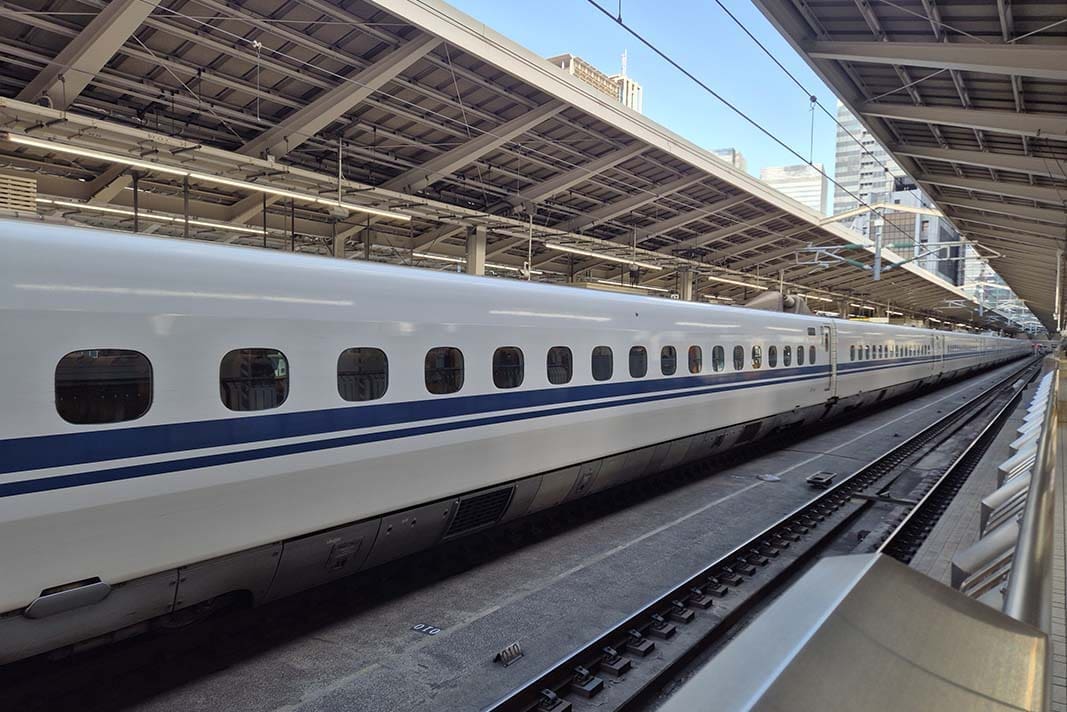
The Shinkansen, known in English as the Bullet Train, is one of the most famous modes of transport around. The Shinkansen is renowned for its speed (it maxes out at 200 mph), punctuality, and smoothness.
If you can, fork out a little extra for a seat in the green car (first class) and book a ‘Mount Fuji’ side view. In the green car, use the at-seat service to order the famous ice cream. This quality offering is deep-frozen, so you can’t just wolf it down. You need to let is slowly soften and savour its taste.
Don’t forget to arrive a little earlier and watch the cleaning crew board and clean the train with military precision in their 7-minute window. When they’ve finished, they bow to the train.
Find the Freshest Sushi at the Tsukiji Outer Market

Japan is famous for its sushi, and in Tokyo, you need to go to the source, Tsukiji Outer Market, where tons of fish are landed, processed, and auctioned each day.
Get up early and take a dawn tour of the fish auctions. Quality tuna goes for eye-watering prices. In January 2026, the ‘Tuna King’, Kiyoshi Kimura, bought the first bluefin tuna of the year for a record 510.3 million yen (£2.4m).
Getting quality tuna nigiri won’t cost you that much. The stalls selling the freshest seafood in Tokyo are great value.
If you’re inspired by the beautifully presented tuna, why not take a sushi preparation course. They’re led by a sushi master, are great fun, and you get to eat what you make!
Stroll Through Shinjuku and Its Nightlife

If you ask someone to describe Tokyo, the chances are they’ll mention garish neon signs and Godzilla. Welcome to Shinjuku, which looks like it inspired the Blade Runner film.
The first challenge is to find your way out of the sprawling Shinjuku Station. The world’s busiest railway station is constantly being redeveloped and is a nightmare to navigate.
Visit after dark, and assuming you ever make it out of Shinjuku’s massive metro station, you’ll walk blinking into sensory overload. Want a 3D cat display watching over you? How about building-sized images of J-pop lookalikes who’ll woo gullible young Japanese girls (for a price, of course)? Need to see the aforementioned Godzilla peeking over a building top? Shinjuku is everything that’s good and bad about Tokyo.
The district is broken up into smaller areas.
Kabukicho – Shinjuku’s notorious red-light district, is not for the faint-hearted. With many restaurants, bars, and adult entertainment venues, it caters to all sexual orientations with numerous gay-friendly places. Look for izakayas (bars) offering nomihoudai, all you can drink deals. Be aware of your surroundings.
Golden-gai – Tiny bars, often with room for only a couple of patrons. Most are only interested in their regulars, but some openly attract tourists. These will usually have signs in English outside. A cover charge is almost always levied with drinks charged on top.
Omoide Yokocho – Known for its cramped alleys and small, delicious food spots, Omoide Yokocho has the unwelcoming nickname ‘Piss Alley’. Historically, they didn’t have facilities requiring patrons to relieve themselves outside. Fortunately, this is a thing of the past.
A feature of Shinjuku is its love hotels. As is often the case in red-light districts, Shinjuku has a lot of ‘love hotels’ which can be rented by the hour. But… Pro-tip the rooms are often bigger and more luxurious than the standard offering in Tokyo. If you can find one which allows several days’ booking (usually those on hotel platforms like Booking.com), they can be a great value stay in Tokyo.
Watch Sumo Wrestlers

With its roots dating back 1500 years and based on Shinto rituals, Sumo is considered one of the world’s oldest martial arts. It is also visually unique and synonymous with Japan.
No visit to Tokyo would be complete without some form of exposure to this unique spectacle. There are three ways visitors can engage with sumo.
Watch a Sumo Tournament
Held six times a year, these tournaments are the pinnacle of professional sumo. Tickets are ridiculously hard to get, especially for weekend bouts, but don’t worry, there are other ways to enjoy sumo wrestling.
Attend a Sumo Training Session
Sumo wrestlers live and train in a stable. It’s here that the novices learn the techniques under the tutelage of more experienced wrestlers and the watchful eye of an Okayata or boss. He is the owner of the stable and a retired wrestler. Each wrestler hopes to work their way through the 6 ranks of Sumo to achieve the title of Yokozuna.
Visitors can attend a morning training session and see the wrestlers put themselves through the rigorous practice required to get to the top.
See a Sumo Show
A little less intense, but an excellent introduction to sumo wrestling. A compere will take you through the history of Sumo and introduce the traditions and concepts of the sport. Two actual sumo wrestlers will demonstrate the moves and engage in a bout. Afterward, the compere will invite volunteers into the dojo (ring) to pit their skills against these behemoths. The sumo wrestlers will also pose for photographs after the show.
Relax in an Onsen
Onsen are a quintessentially Japanese experience, which visitors should try at least once.
An Onsen is a hot spring heated by geothermal activity where bathers soak for the relaxation and health benefits. They exist all over Japan, and are often attached to Ryoken, traditional Japanese Inns, but they can also be experienced in Tokyo.
Newbies should beware, however, as with most things in Japan, the Onsen experience is driven by an etiquette and set of rules which must be followed.
- Onsen are experienced fully nude, and are therefore unisex.
- Users shower BEFORE entering the hot pools.
- Make sure all soap is washed off, and towel dry after showering.
- Do not let your towel touch the onsen water (experts balance them on their heads).
- Tattoos are forbidden because of their association with organised crime in Japan (this stance is softening and plasters may be offered to cover up smaller tattoos).
Many onsen include the rental of a yukata, traditional onsen clothing for the time you’re not actually in the onsen water.
If possible, try an outdoor onsen like the Toyosu Manyo Club for a more natural experience.
Visit Mount Fuji
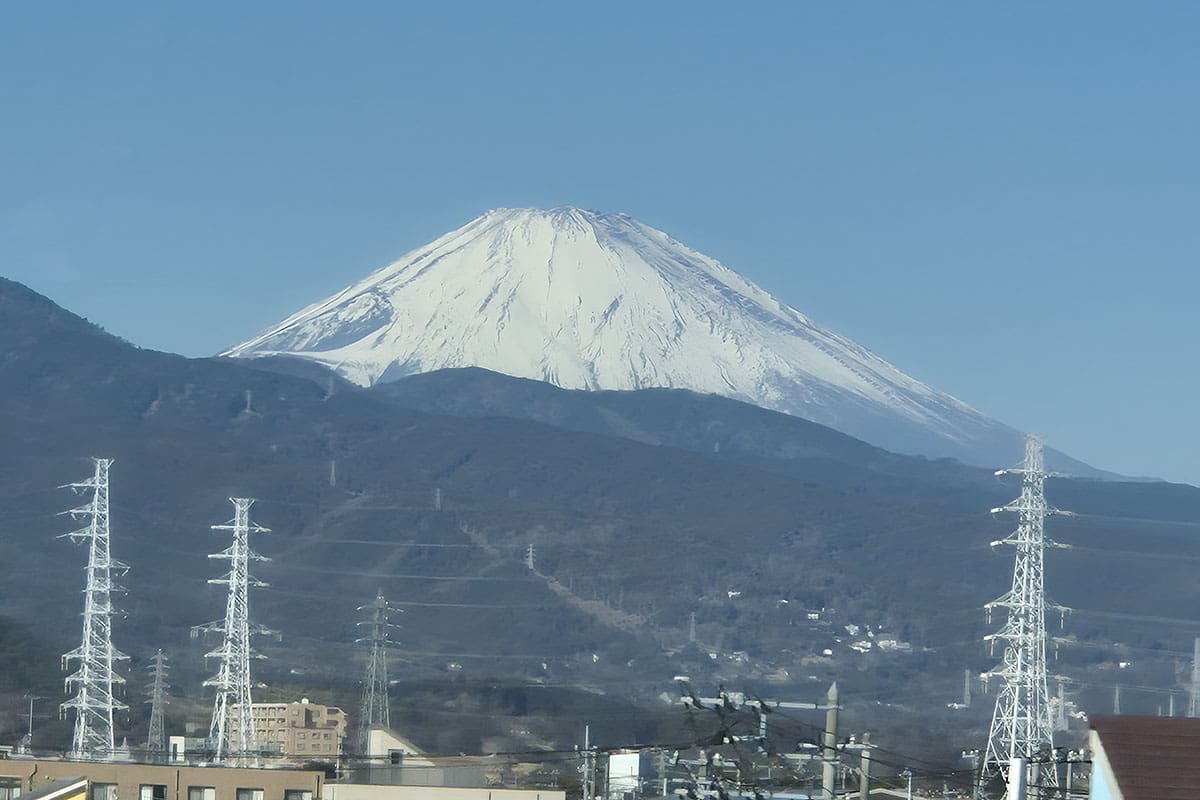
Fujisan or Mount Fuji is one of Japan’s most famous landmarks and is revered by the Japanese people. The 3776m high volcano is Japan’s highest mountain and one of the top 10 island mountains in the world.
If you’re interested in climbing Mount Fuji, you may be pleased to know it’s more of a hike than a climb. The season runs from July to September, with strict rules around equipment. Hiking shoes, cold-weather gear, and rain clothes are mandatory. There are several routes, but the most popular, the Yoshida Trail, is limited to 4000 hikers a day. Booking slots online in advance is possible, and the cost is 40,000 yen.
A more leisurely way to view Fuji San is to head to the Churei-to pagoda, Fuji Five Lakes, or the hot spring resort of Hakone.
Churei-to Pagoda
Followers of Instagram will probably be familiar with the view of Mount Fuji from Churei-to. It’s the iconic shot, particularly in autumn or during the cherry blossom season (although the crowds increase massively at these times). Churei-to is easy to do as a day trip, although overnight stays in the area are also popular.
Fuji Five Lakes
Mount Fuji can be seen from the shore of any of the five lakes. Lake Kawaguchi is the easiest to get to from Tokyo, but this comes at the cost of crowds.
Lake Kawaguchi is reachable from Tokyo by bus or train. Take a bus from Tokyo Station or the Shinjuku bus station to Kawaguchiko. Direct buses run once or twice an hour and take about 2 hours.
Alternatively, trains run from Shinjuku Station, but most require a change at Otsuki to reach Kawaguchiko Station. A few direct trains a day run between Shinjuku and Kawaguchiko.
Hakone
If your goal is to get superb views of Mount Fuji, the first two options are probably better. Hakone is further away and more reliant on clear weather. There is, however, more to do here, if the mountain isn’t visible. Hakone features hot springs, museums, and a mountain railway line.
Experience Japanese Cuisine

Tokyo, and indeed the whole of Japan, is a foodie’s dream. Whether you want the freshest sushi, a filling bowl of ramen, or the most exquisitely presented kaiseki meal, you can find it in Tokyo.
Eating in Tokyo can, of course, be eye wateringly expensive if you choose, but it can also be surprisingly cheap, often without sacrificing quality.
Budget travellers should start their at Japan’s ubiquitous convenience stores. These are everywhere in Tokyo. The major chains are 7/Eleven, Lawson’s, and FamilyMart. These are all extremely good value, and the sushi will probably be better than you’re used to at higher-end restaurants at home. Other standouts include fried chicken and boiled eggs (with soft yolks). If you want to change your life, try 7/Eleven’s strawberry and cream sandwiches!
Japanese also has a range of extremely good chain restaurants. These are good for first-time visitors because they often have English language tablets on the table which take away the language barrier.
Recommended chains include:
- CoCo Ichybanya – Curry where you can set your spice level from 1 to 15 (and even 20 in some restaurants). Be careful, my friends tried level 3, and it blew their heads off!
- Sushiro – as you might expect of Japan’s largest sushi train restaurant chain, it knocks spots off anything you might find at home. It’s great value, you can try everything (including horse nigiri) without breaking the bank.
- Ippudo – does fantastic ramen. They’re great value, but they don’t skimp on what makes ramen so good, its stock!
If you want to splash out, the Kaiseki dining might be for you. Kaiseki is high-end dining designed to engage all the senses and, naturally, comes with a price tag to match. A Kaiseki experience is much more than simply eating. The chef elevates food presentation to an art form, considering everything from the dishes the food is served on to the room’s décor. It’s a unique dining experience, and if you have the budget, well worth it.
Visit the Imperial Palace and Gardens
Located close to Tokyo Station, the Imperial Palace is an essential tour for visitors to Tokyo.
This incarnation of the palace is a reconstruction, as the original was destroyed during World War II. Despite this, it stands on the same ground as the 1888 version and is similar.
Although the inner grounds are usually closed to the public (access is permitted twice a year during specific holidays). Tours of the palace focus on the grounds, without access to any buildings, are in both English and Japanese, and last about 75 minutes.
Highlights of a visit to the Imperial Palace and Gardens are the two bridges. The ‘eyeglass’ bridge, is so named because the reflection makes it look like a pair of spectacles. The double bridge originally had two levels.
The East gardens are also accessible to the public on all but special occasions.
Learn about Samurai and Ninja

A fun museum in the Asakusa district will teach you everything you need to know about Japan’s most famous warriors. Before the tour starts, you’ll get to dress in Samurai armour and have your picture taken.
As the tour progresses through the museum, the guide gives a history lesson explaining the differences, philosophies, strengths, and weaknesses of the two classes. This is illustrated by visual aids and an excellent collection of armour and weaponry.
After the tour, possibly the best part. The tour enters a room with targets printed on cork walls. Here, you’ll learn to throw the shuriken ‘death star’, and visitors compete to see who can be the deadliest ninja.
Alternatively, why not go the whole hog and add a lesson in Samurai sword play, the perfect thing to set you up as an extra in the next Jet Li film!
Conclusion
Want some of the most unusual food on the planet? Tokyo’s got it. Sport your thing? check out Tokyo’s Sumo scene. Bit of a culture vulture? You’ve come to the right place. Do you want history? No problem.
Whatever your particular thing is, Tokyo’s got you covered, and this guide has highlighted some of the best things to do in Tokyo!
Latest Posts from Japan


Best Things to do in… Posts


